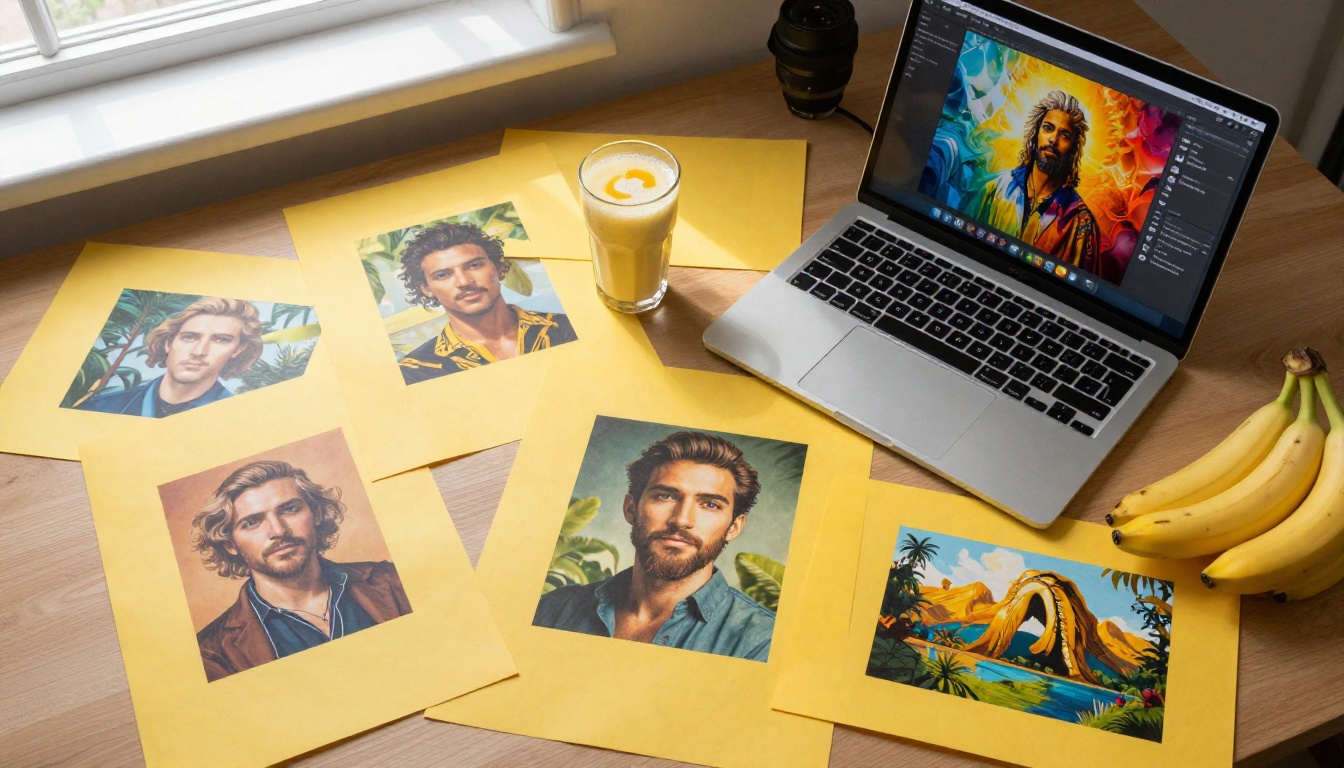
Something odd happened a few weeks ago across every AI community worth following. Posts started showing up, results that looked almost too clean, too natural to have come from a tool nobody had heard of. The model was called Nano Banana Pro, and within days it went from obscure to unavoidable.

What Nano Banana Pro Actually Is
Nano Banana Pro is a compact text-to-image model designed around one very specific idea: deliver strong output without the bloat. Where most large image generation models prioritize scale, this one prioritizes efficiency. The result is a model that runs faster, costs less to operate, and still produces images that hold up against tools with ten times the parameter count.
The name is playful, and that's intentional. The creators behind it wanted something that stuck in memory, and it worked. But behind the branding is a model architecture that borrows from the latest diffusion research and applies it at a fraction of the typical compute cost. The broader AI image community took notice precisely because the results contradicted every expectation about what a small model can do.
A compact model built for real output
"Compact" in the AI world usually means compromise. Nano Banana Pro breaks that assumption. The model was trained on a carefully curated dataset with a focus on photorealistic human subjects, natural environments, and product photography. Those three categories account for the vast majority of what people actually use image generators for, so the specialization pays off immediately.
Inference speed is where the difference becomes obvious. A typical generation runs in under three seconds on standard cloud hardware. For comparison, larger models in the same quality tier can take anywhere from 8 to 25 seconds. When you are iterating through dozens of prompt variations in a session, that gap compounds fast. A 20-minute creative sprint with Nano Banana Pro might yield 80 to 100 unique images. That volume is simply not achievable with heavier models on the same timeline.
Why "nano" doesn't mean weak
The word nano signals size, not quality. Nano Banana Pro achieves competitive output by being surgical about what it optimizes for. It does not try to generate every possible style or match every aesthetic category. It focuses on what its users need most and does that extremely well.
This is the same philosophy driving some of the most widely-used models in the Flux family. Flux Schnell, for instance, uses a four-step denoising process that would sound irresponsibly fast on paper, but produces results sharp enough to publish directly. Nano Banana Pro takes a similar approach: aggressive optimization, no wasted computation, output that performs at its intended use case rather than chasing abstract benchmarks.
The Viral Moment That Started It All
Most AI tools grow slowly. A few researchers try them, write about them, and word spreads across forums over several months. Nano Banana Pro did not follow that path at all.
How it spread on social media
A single comparison thread started everything. Someone posted outputs from three different models using the same prompt: a natural portrait under afternoon sunlight. Two of the images looked flat. One looked like a photograph. The one that looked like a photograph came from Nano Banana Pro.
That post got shared several thousand times before the week was out. Comments split between people who thought it was edited and people who immediately went to try it themselves. Both groups helped spread the tool. The skeptics kept the thread alive with debate. The curious ones became users who then posted their own results. The cycle fed itself.
The original comparison post was not paid promotion. No marketing budget. No influencer deal. Just a result that was genuinely difficult to dismiss.
The outputs that made people stop scrolling
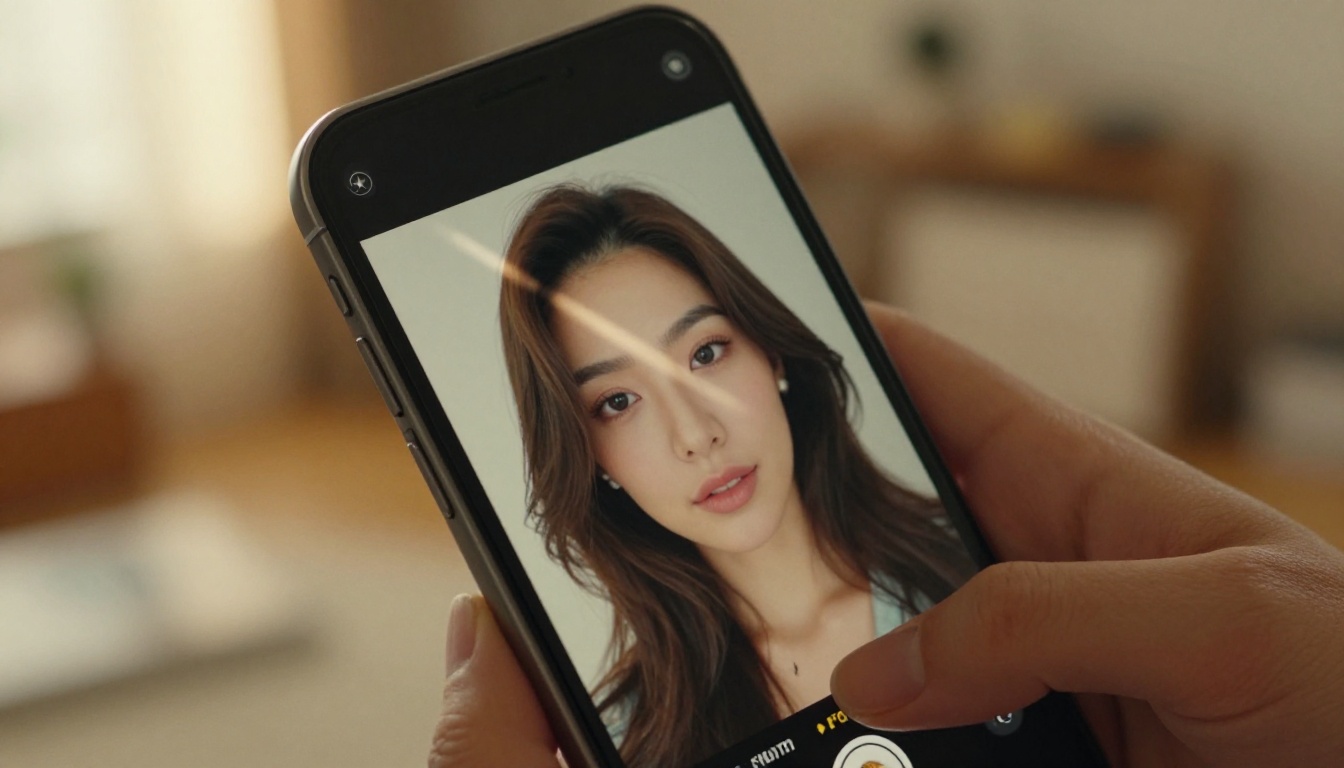
What the viral post captured was something real about the model's output style. Nano Banana Pro handles skin tone rendering with a level of consistency that most models miss. Highlights do not blow out. Shadows hold detail. The tonal range in a portrait from this model sits in a sweet spot that feels less like generated art and more like a well-exposed photograph shot on a fast prime lens.
That quality translates across subject matter. Product photography, landscape imagery, and architectural shots all benefit from the same underlying calibration that makes portraits work. Once people started testing it beyond portraits, the positive reaction widened, and the range of use cases grew alongside it.

What Makes the Output Different
Not every model that trends actually delivers. Nano Banana Pro backs up the hype with specific technical choices that produce measurable differences in the final output.
Color accuracy and skin tones
The model was fine-tuned with particular attention to spectral accuracy. Colors in the output map closely to how light behaves in the physical world, rather than how image generators typically approximate it. Greens are not artificially saturated. Blues do not shift toward purple in shadows. Skin tones sit in a realistic gamut across ethnicities without flattening to a default palette that favors one over others.
This matters significantly for anyone using AI images in professional contexts. A product image that looks accurate and matches the physical product creates trust with the audience. An image that reads as "AI" in that same context erodes it almost instantly.
Speed vs. quality balance
Nano Banana Pro occupies a specific and useful position on the speed-quality curve:
| Model | Avg. Generation Time | Output Quality | Best For |
|---|
| Nano Banana Pro | ~3 seconds | Very High | Portraits, products, fast iteration |
| Flux Schnell | ~5 seconds | High | Rapid concept work |
| Flux Dev | ~8 seconds | Very High | Complex, detailed scenes |
| Flux Pro | ~12 seconds | Exceptional | Final production assets |
| Stable Diffusion | ~10 seconds | High | Style flexibility |
The table communicates the positioning clearly. Nano Banana Pro is not trying to replace Flux Pro for maximum-quality production output. It is trying to be the model you reach for when you need something real and fast, and it succeeds at that role consistently.

Who Is Actually Using It
The user base that assembled around Nano Banana Pro is broader than most new model launches see in their first months.
Creators and content teams
Social media managers, brand designers, and solo creators were the first wave of adoption. These are people who need a constant supply of visual content, who operate on tight timelines, and who cannot afford to spend hours prompting and refining for a single image. Nano Banana Pro fits that workflow precisely because it generates strong results from shorter, less technical prompts.
A typical use case: a content creator needs three product lifestyle images for a brand campaign. Instead of booking a photographer or waiting on a freelancer, they spend 20 minutes prompting different angles and lighting setups, download the three best results, and they are done. The images are clean enough to post without post-processing. The time saved versus any alternative is substantial.
Everyday users with no design background
The second wave was broader and, in some ways, more interesting: people with no design or photography background who simply wanted to make something that looked good. The accessibility of Nano Banana Pro comes partly from its tolerance for vague prompts. You do not need to know what "volumetric lighting" or "bokeh" means to get a result that naturally incorporates those techniques.
This has pulled in a population of users who previously felt that AI image generation required expertise they did not have. When a tool is approachable without being simplistic, it opens to people who would otherwise not try it, and that group is much larger than the expert population.
💡 Tip: Even with forgiving models, specificity produces better results. Instead of "a woman at the beach," write "a woman with dark hair standing in shallow water at sunset, looking toward the horizon." The more concrete the description, the more intentional the output.

How It Compares to Established Models
Placing a new model in context matters. Nano Banana Pro gets compared most often to the Flux family, which has become the reference point for serious image generation work.
Side-by-side with Flux Schnell and Flux Dev
Flux Schnell is the speed benchmark in the Flux lineup. Its four-step denoising process produces clean images fast, and it has become the default for anyone who needs to iterate quickly through many prompt variations in a single session. Nano Banana Pro runs at comparable speed but applies its fine-tuning advantage specifically in portrait and product categories, where it tends to edge ahead.
Flux Dev is the more capable model in the family. With its 12-billion parameter architecture, it handles complex scenes, intricate textures, and detailed compositional prompts better than either faster model. The tradeoff is generation time and compute cost. For final-quality outputs where every detail needs to hold up at large sizes, Flux Dev is still the right choice. For fast creative work, the gap between Flux Dev and Nano Banana Pro is smaller than the time difference might suggest.
When to use each model
The choice depends on what you are actually making:
- Portrait-heavy content: Nano Banana Pro for fast iterations, Flux Dev for final assets
- Rapid concept work: Flux Schnell or Nano Banana Pro for quick rounds
- Production-quality campaign images: Flux Pro for maximum precision
- Broad stylistic range: Stable Diffusion when you need variety across aesthetics
No single model wins across all scenarios. The advantage goes to whoever has access to several options and knows which to reach for first.

Prompts That Actually Work With It
Getting strong output from Nano Banana Pro follows patterns that apply broadly to photorealistic generation, with a few specifics worth knowing for this model.
What to include in every prompt
Strong prompts for this model consistently include:
- Subject with physical specifics (hair color, clothing, expression, posture)
- Environment with enough detail to establish the mood (outdoor cafe at midday, minimalist studio, forest clearing at dawn)
- Lighting defined by direction and quality (soft north light from the left, warm backlight from the right, even overcast diffusion)
- Camera reference when you want a specific look (85mm lens, shallow depth of field, low angle)
You do not need all four in every prompt. Each element you include sharpens the output toward your intent and reduces the chance the model fills in a detail you did not want.
Common mistakes to avoid
- Stacking too many style descriptors cancels them out rather than combining them. Pick two and commit.
- Abstract adjectives like "beautiful" or "stunning" contribute less than descriptive ones like "sun-kissed skin" or "soft catchlights in the eyes."
- Negative prompts are worth using. Explicitly excluding what you do not want (blurry background, distorted hands, oversaturated colors) tightens consistency across multiple generations.
- Writing the prompt as a sentence rather than a structured description often produces better results. Think description, not instruction.
💡 Tip: For portraits, anchor the facial lighting with a specific reference. "Rembrandt lighting from upper left" produces a more consistent and intentional result than "dramatic lighting" alone.
Why the Trend Has Staying Power
Not every viral AI tool lasts past its initial spread. Some rely on cherry-picked outputs for their moment of visibility, and users who try them and find the typical result far below what they saw in posts move on quickly. Nano Banana Pro shows specific signs of lasting longer than a single news cycle.
The output quality is repeatable
The gap between a good prompt and a great prompt with this model is smaller than with most alternatives. That means more users get results they are happy with on their first or second attempt, rather than after a long learning curve. When the average output stays close to the best output, the tool retains users who would otherwise drop off after a frustrating first session.
The use cases are genuinely broad
Portrait photography, product imagery, lifestyle content, social media graphics, and architectural visualization all sit within what this model does well. A tool with that range does not lose relevance quickly because its value is not tied to a single trend or content category. As the visual needs of creators shift, the model shifts with them.
The community keeps it visible
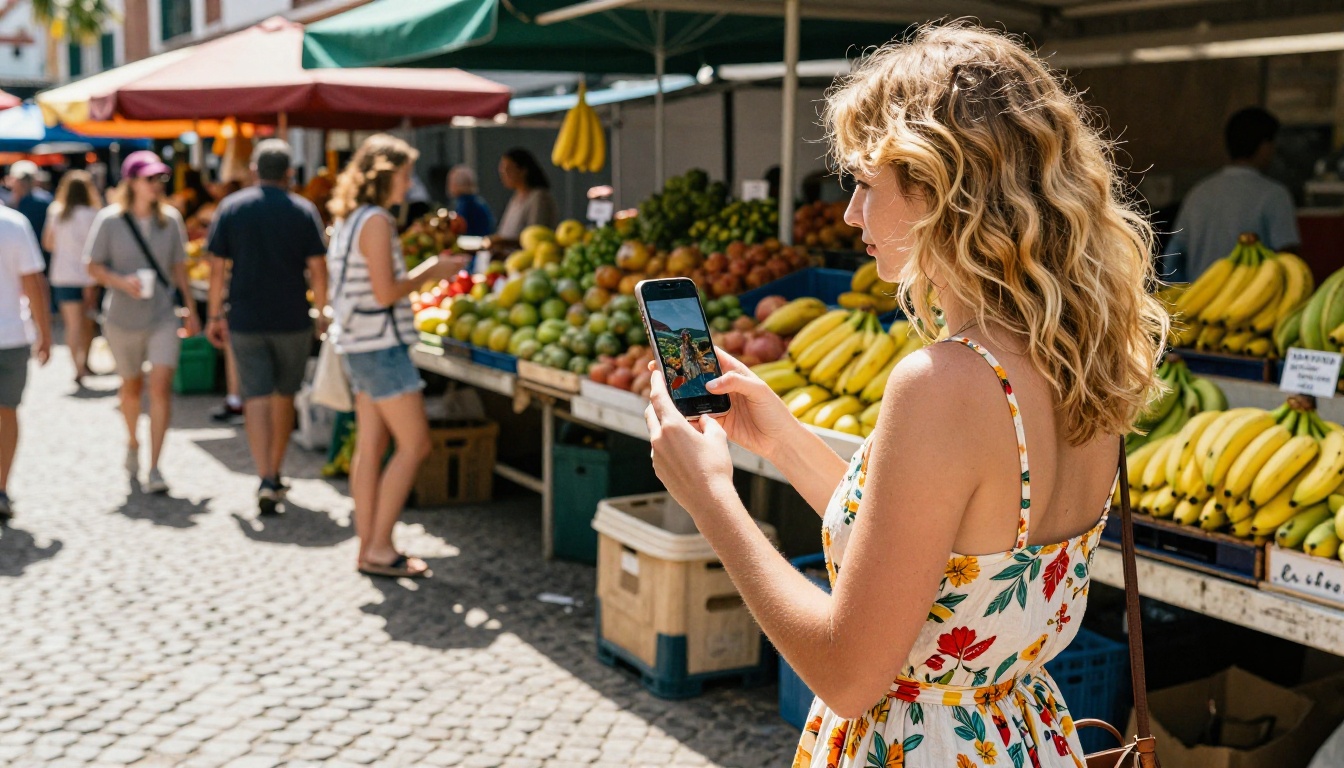
The images being shared from Nano Banana Pro are strong enough to stand on their own as content. When a tool's output is worth sharing independently of the fact that it came from AI, users market the tool with every post they make. That cycle has not slowed since the original viral moment, and it tends to be self-sustaining as long as the underlying quality holds.
The Bigger Picture Behind This Model
Nano Banana Pro is a product, but it is also a signal of something larger happening across the AI image generation space.
Efficiency is becoming the new benchmark
For the first two years of accessible AI image generation, the conversation centered on which model could produce the most impressive possible output given unlimited compute. That question has mostly been answered: several models can produce impressive output, and they tend to converge on a quality ceiling.
The new question is which model produces the best output per unit of time and cost. That reframe favors architectures like Nano Banana Pro, which accept some ceiling on maximum quality in exchange for dramatic improvements in practical usability. The models winning adoption in 2027 are not always the most powerful. They are the most practical.
What this means for model choice
This shift has real implications for how creators should think about their toolset. The model that performs best on a benchmark is not always the model that produces the best results in a real working session. Factors like iteration speed, prompt tolerance, and output consistency at scale often matter more than maximum peak quality.
This is exactly why Flux Schnell became so widely adopted despite being explicitly positioned as the "fast" rather than the "best" option in the Flux family. Nano Banana Pro is winning on the same logic: it fits how people actually work, rather than how benchmarks expect them to work.

Start Generating Your Own Images Today
Nano Banana Pro is one signal in a larger shift happening across AI image generation. The models gaining the most traction now are not necessarily the most powerful on paper. They are the most practical: fast enough to fit a real workflow, accurate enough to produce usable results, and accessible enough that you do not need to be a prompt engineer to get value from them.
On PicassoIA, you have access to Flux Schnell, Flux Dev, Flux Pro, and Stable Diffusion, all without credit limits or usage caps. You can run the same prompt across multiple models, compare the outputs directly, and build an intuition for which model suits which type of content. That kind of side-by-side testing is the fastest way to get genuinely good at working with AI image tools.
Write a prompt that describes something specific. Pick a model. Generate. Adjust one element, whether that is the lighting, the framing, or a physical detail in the subject. Generate again. That iterative process is where the real skill develops, and the time commitment per session is a fraction of what any other visual production method would require.
💡 The best starting point is always a subject you know well. If you know what a good portrait looks like, start there. The gap between what you can visualize and what the model can produce will close faster than you expect.
The space is moving fast, and the tools available today are significantly more capable than what existed twelve months ago. Nano Banana Pro is one of the more interesting arrivals in that progression. Try it alongside the models on PicassoIA, compare what each one does with your specific prompts, and start building the visual library you actually want.


