If you spend any time in AI communities, developer forums, or tech discussions, you've noticed something: GPT-5.6 is everywhere right now. Not GPT-5. Not GPT-5 Pro. Specifically GPT-5.6, and more specifically, the three variants that ship with it. The conversation isn't just curiosity — it's practitioners sharing real results, surprising benchmark numbers, and workflows that simply weren't possible six months ago. This article breaks down exactly what's driving that conversation.
What GPT-5.6 Actually Is
Before the variants, the version number itself matters. GPT-5.6 sits between GPT-5 and a next-generation frontier model. It's a refinement cycle, not a reinvention. Think of it the way you'd think of a car manufacturer releasing a mid-cycle refresh: the platform is the same, but specific systems received targeted engineering attention.
The core improvements in GPT-5.6 center on three things:
- Instruction fidelity — the model follows nuanced, multi-part instructions with significantly fewer drift errors than GPT-5
- Context coherence — across long documents and extended conversations, GPT-5.6 maintains internal consistency far better
- Latency optimization — the architecture was refined to reduce time-to-first-token without sacrificing output quality
Those might sound like incremental gains. In practice, they change whether a model is actually usable in production pipelines, and that's why people are paying attention.

Three Distinct Variants
The most important thing to understand about GPT-5.6 is that it isn't one model. OpenAI shipped three purpose-built variants:
| Variant | Primary Use | Strengths |
|---|
| GPT-5.6 Luna | Fast conversational replies | Speed, cost efficiency, casual tasks |
| GPT-5.6 Terra | Production text generation | Long-form quality, consistency, depth |
| GPT-5.6 Sol | Complex coding problems | Technical reasoning, code accuracy |
Each variant was tuned separately on different data distributions and RLHF reward structures. This is significant because it means you're not making trade-offs anymore. You're choosing the right tool for the task at hand.
Why It Replaced GPT-5 So Fast
GPT-5 was a capable model. GPT-5.6 is a practical one. The distinction sounds subtle but it isn't.
GPT-5 required careful prompt engineering to get consistent output quality. GPT-5.6, especially Terra and Sol, handles ambiguous instructions with noticeably more grace. Teams that were spending engineering hours writing defensive prompt wrappers found they could simplify their pipelines considerably after switching.
💡 Practical insight: If your current workflow relies heavily on system prompts to constrain GPT-5 behavior, test GPT-5.6 Terra with a leaner prompt first. You may be surprised at how much less scaffolding it needs.
The Numbers Behind the Hype
Talk is cheap in AI. Numbers matter.
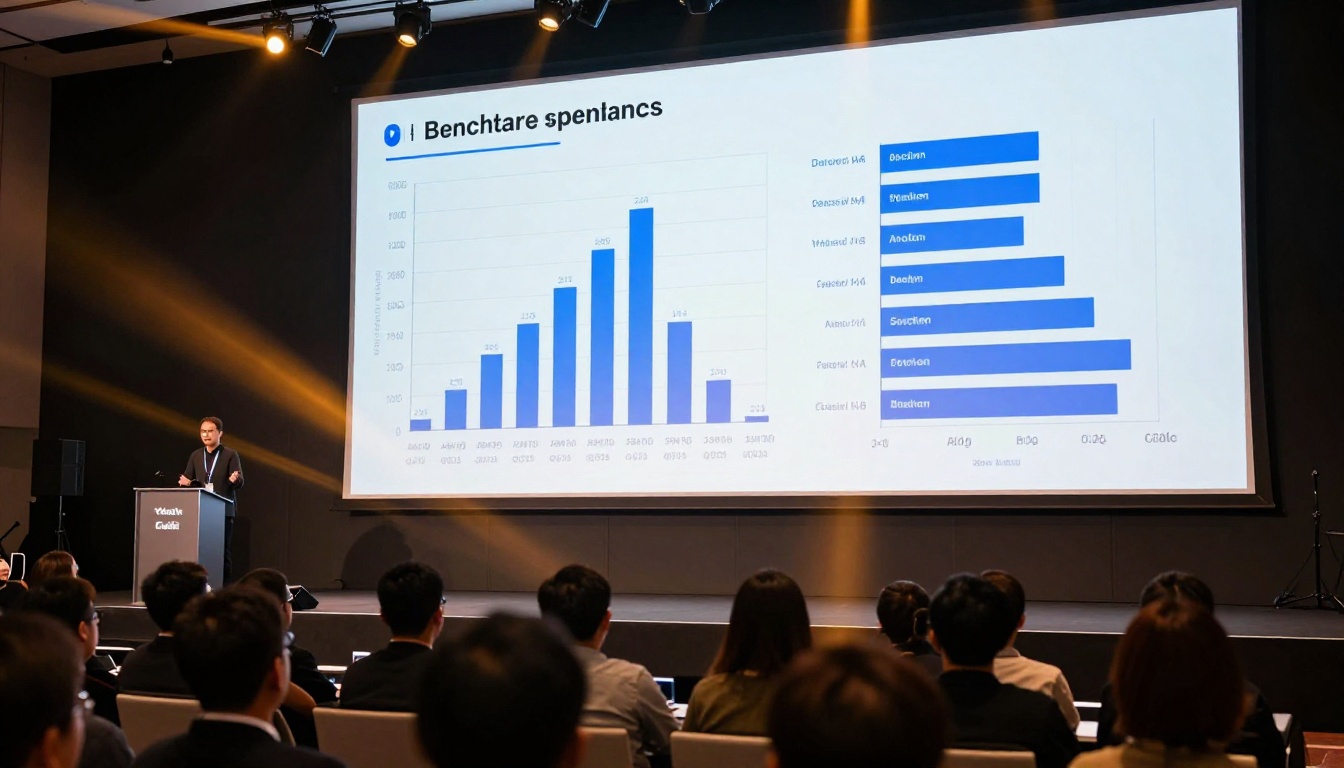
Benchmark Scores That Stood Out
GPT-5.6 Sol posted numbers on HumanEval and SWE-Bench that got people's attention. On SWE-Bench Verified, a benchmark measuring whether AI models can actually resolve real GitHub issues, Sol scored meaningfully higher than its predecessor. The scores reflect something beyond benchmark gaming: developers who pulled Sol into real codebases reported noticeably fewer hallucinated function signatures and better awareness of dependency context.
On MMLU Pro, Terra outperformed standard GPT-5 in multi-step reasoning chains, particularly in financial analysis and legal summarization tasks where long-range coherence is critical.
Luna is the speed story. It hits response latencies competitive with much smaller models while maintaining a quality floor that larger models struggled to match at the same speed tier.
Speed vs. Intelligence Tradeoff
Every AI model lives somewhere on a spectrum between raw reasoning depth and real-time responsiveness. What makes GPT-5.6 interesting is that the variant structure sidesteps this tradeoff entirely.
- Need to power a chat interface or customer support bot? Luna delivers sub-second responses at scale.
- Building a content pipeline or research assistant? Terra gives you depth without sacrificing structure.
- Running automated code review or debugging agents? Sol's technical precision makes it the right call.
The old world said: pick your tradeoff. GPT-5.6 says: pick your variant.
Who Is Using It and Why

Developers Choosing Sol
GPT-5.6 Sol has become the default recommendation in engineering communities for a specific reason: it's reliable in a way that coding-focused models often aren't. When Sol generates a function, it's less likely to invent parameters that don't exist, reference libraries that weren't imported, or misread complex nested logic.
For developers building AI agents that write, test, and iterate on code autonomously, reliability isn't a nice-to-have. It's the whole thing. Sol's lower hallucination rate on technical tasks directly translates into fewer broken build cycles and more autonomous pipelines that actually run end-to-end.
Many teams running agentic coding setups alongside models like Kimi K2.6 are routing their most technically demanding subtasks specifically to Sol because of this precision advantage.
Content Teams Picking Terra
GPT-5.6 Terra has attracted content operations teams building at scale. The production-focused design means that when you feed Terra a brief and a tone guide, the output is consistent across batches. Consistency is hard. Large language models tend to drift stylistically over long runs. Terra was specifically trained to maintain character.
Writers working with Terra describe it as having a stronger editorial instinct than earlier models. It knows when to cut, when to expand, and when a transition is weak. That's the kind of qualitative improvement that doesn't show up in benchmarks but transforms a workflow in ways that matter when you're producing hundreds of pieces per month.
Everyday Users Picking Luna
GPT-5.6 Luna is winning on simplicity and speed. For anyone who just needs an AI text generation tool that replies fast, doesn't overthink simple requests, and handles everyday tasks like summarizing emails, drafting messages, or answering quick questions, Luna is the obvious choice.
The key insight: most AI users don't need a reasoning powerhouse for daily tasks. Luna is brilliant at being appropriately sized for what most people actually ask of an AI assistant. And at its price-to-performance ratio, it's hard to argue with for volume workloads.

How GPT-5.6 Stacks Up
GPT-5.6 didn't arrive into a vacuum. The large language model space in 2027 is genuinely competitive, and comparing models honestly matters.
vs. Claude Opus 4.7
Claude Opus 4.7 remains the gold standard for extended, nuanced reasoning tasks, particularly tasks that require holding large amounts of context and drawing careful inferences. Where Claude Opus 4.7 leads is in tasks requiring careful step-by-step logical reasoning, lengthy document analysis, and research synthesis across multiple sources.
GPT-5.6 Sol competes strongly with Opus 4.7 on coding tasks specifically. For general deep reasoning, Opus 4.7 still earns its reputation. The practical decision: use Sol when the task is primarily technical, Opus 4.7 when you need maximum reasoning depth on complex open-ended problems.
vs. Grok 4
Grok 4 made headlines when it launched by posting competitive scores on math and science benchmarks. It's a legitimate competitor in the reasoning category. Where Grok 4 distinguishes itself is in STEM problem-solving, particularly physics and mathematics at competition level.
GPT-5.6 Sol and Terra both edge out Grok 4 in real-world text production quality and instruction following, which matters more for most business applications than competition-level math. If you're building a general-purpose AI assistant or content system, GPT-5.6 Terra wins the day-to-day reliability test.
vs. Gemini 3.1 Pro
Gemini 3.1 Pro is Google's answer to the long-context challenge. It handles extremely large inputs with impressive grace. Feeding it an entire product codebase or a book-length document is where it shines brightest.
GPT-5.6 Terra and Sol both have strong context windows but don't quite match Gemini 3.1 Pro's absolute ceiling for raw context volume. However, for most practical applications under 500k tokens, GPT-5.6 offers superior instruction fidelity within that context. The edge goes to Gemini when context size is the binding constraint, and to GPT-5.6 when precision within context matters more.
| Task | Best Model |
|---|
| Complex coding and debugging | GPT-5.6 Sol |
| Long-form content production | GPT-5.6 Terra |
| Fast daily AI chat tasks | GPT-5.6 Luna |
| Deep logical reasoning | Claude Opus 4.7 |
| STEM problem solving | Grok 4 |
| Ultra-long document input | Gemini 3.1 Pro |

3 Things Nobody Mentions
The Token Cost Reality
Every conversation about GPT-5.6 focuses on capability. Fewer people talk honestly about token economics. Sol and Terra both carry premium pricing compared to Luna and compared to earlier GPT-5 tiers. For teams running high-volume AI workloads, the cost structure matters as much as the capability structure.
The practical recommendation: use Luna for any task where speed and cost efficiency matter more than depth. Reserve Sol for tasks where an error or hallucination has real downstream cost. Terra sits in the middle, appropriate for production content where quality directly impacts output value.
💡 Cost tip: Mixing variants within a pipeline often gives you the best cost-quality balance. Use Luna to pre-process or filter inputs, then route only the complex cases to Sol or Terra.
Where It Still Falls Short
GPT-5.6 is strong. It's not magic. Three persistent weaknesses worth knowing about:
- Very long reasoning chains: On tasks requiring 20-plus sequential reasoning steps, models including GPT-5.6 can still lose the thread. Break complex tasks into staged subtasks.
- Highly specialized domain knowledge: Sol is excellent at mainstream programming languages and frameworks. Esoteric or very new tooling still produces occasional confident-but-wrong outputs.
- Multimodal depth: GPT-5.6 remains a text-first model. For tasks requiring sophisticated visual reasoning, dedicated multimodal architectures still hold advantages.
Why Three Variants Exist at All
The variant structure isn't just a product decision. It's an architectural signal. Training a single large language model to be simultaneously fastest, deepest, and most technically precise is genuinely hard. These properties pull in opposite directions during training.
By separating Luna, Terra, and Sol from the start, OpenAI could optimize each variant's RLHF training, dataset composition, and inference architecture independently. The result is three models that each outperform what a single general model could achieve at their respective specialties. It's a sensible approach that more model providers will likely adopt as the field matures.
Compare this to how DeepSeek R1 took a different path, building a single model with extended chain-of-thought reasoning baked in. Both are valid architectural bets, and the market is still deciding which philosophy wins at scale.

How to Use GPT-5.6 on PicassoIA
PicassoIA hosts all three GPT-5.6 variants in its large language model collection, making them accessible without API setup or token management overhead. Here's how to get started.

Step 1: Pick Your Variant
Go to the PicassoIA large language model collection and select based on your task:
- Quick responses, conversations, simple tasks: GPT-5.6 Luna
- Content creation, long-form writing, production text: GPT-5.6 Terra
- Code writing, debugging, technical reasoning: GPT-5.6 Sol
If you're not sure, start with Terra. It covers the widest range of general-purpose tasks with the most consistent output quality.
Step 2: Write the Right Prompt
GPT-5.6's improved instruction fidelity means you don't need elaborate prompt engineering to get good results. A few principles that work consistently across all three variants:
- Be specific about output format: Tell the model if you want bullet points, paragraphs, JSON, or code blocks. It will follow.
- Include context in the first message: GPT-5.6 benefits from a brief context-setting intro before your actual request.
- State constraints directly: Word limits, tone requirements, and specific exclusions should be stated plainly, not implied.
💡 Prompt example for Terra: "Write a 400-word product description for [X] in a confident, direct tone. No superlatives. No bullet points. Output as plain prose paragraphs."
Step 3: Iterate Without Friction
One of GPT-5.6's practical strengths is its ability to take correction and iterate cleanly. If the first output isn't quite right, a brief follow-up instruction is usually enough. You don't need to restart conversations or re-establish context. The model holds your original instruction while incorporating new direction.
This makes GPT-5.6 particularly strong for workflows that involve human-in-the-loop review: write, review, refine, repeat, without the frustrating context drift that earlier large language models suffered from during extended sessions.
What This Signals for AI in 2027

The Bigger Race Nobody Talks About
The headline conversation in AI focuses on raw capability: which model scores highest on which benchmark. The real competition happening in 2027 is different. It's about deployment quality: how reliably a model behaves in production, how predictable it is across thousands of calls, and how well it integrates into real systems.
GPT-5.6 is a signal that OpenAI is taking the deployment quality race seriously. The variant structure, the instruction fidelity improvements, and the latency work are all deployability investments, not raw-intelligence plays. The same trend is visible at Anthropic with Claude Opus 4.7, at xAI with Grok 4, and at Google with Gemini 3.1 Pro.
The models that win the next cycle won't just be the most capable in benchmarks. They'll be the ones that ship consistently, break rarely, and integrate cleanly into the products people are actually building. GPT-5.6 is making a strong argument that it belongs in that category.
There's also a broader implication worth noting: as AI models become more specialized at the variant level, the skill of choosing the right model for each task becomes genuinely valuable. Knowing when to reach for DeepSeek R1 for reasoning chains, Kimi K2.6 for agentic tasks, or GPT-5.6 Sol for technical coding isn't just trivia. It's a real professional skill that separates serious practitioners from people just poking at chatbots.
Start Creating with GPT-5.6 Now

The fastest way to understand what GPT-5.6 actually does is to run it on a task you care about. Theory only goes so far. The real picture emerges when you put a tricky coding problem in front of Sol, a nuanced writing task in front of Terra, and a quick-fire question in front of Luna.
PicassoIA puts all three variants in one place alongside Claude Opus 4.7, Grok 4, Gemini 3.1 Pro, DeepSeek R1, and 70-plus other large language models so you can compare outputs on the same task without switching between platforms. That side-by-side comparison is often the most valuable exercise you can do to build genuine intuition about these models.
Pick a variant. Write a prompt. See what happens. The conversation about GPT-5.6 is worth joining with your own data, not just reading about.


