The numbers are hard to argue with. NSFW AI platforms pull in tens of millions of monthly visits. Some of the fastest-growing apps before being pulled from app stores were AI companion tools with explicit modes. Undress AI sites, character chat apps, and unrestricted image generators are drawing audiences that rival mainstream social networks. This isn't a niche anymore. It's a massive, fast-moving sector of the AI industry, and the people using it aren't who you might expect.
The Numbers Don't Lie
Growth that surprises industry watchers
In 2023, analytics firm Similarweb reported that NSFW AI platforms collectively attracted over 200 million monthly visits, outpacing many well-funded mainstream AI tools. By 2025, those figures have grown significantly. Platforms like Character.AI, which added unfiltered persona options, saw user counts surpass 20 million daily active users at peak periods. Dedicated image generation platforms with adult content options regularly crack the top 100 apps in traffic within their regions.
The growth isn't limited to one country or demographic. Usage data shows broad distribution across North America, Europe, and Southeast Asia, with particularly high activity among adults aged 25 to 44, a group with disposable income and comfort with technology.
Who's actually using these tools
Surveys from platforms that have published user research consistently show three dominant user types. First, people using AI for personal entertainment and fantasy fulfillment, the largest group by far. Second, artists and content creators producing suggestive imagery for platforms that allow adult content. Third, people seeking digital companionship, particularly those dealing with loneliness, social anxiety, or limited access to traditional relationships.

A smaller but significant group includes researchers, journalists, and policy professionals studying these tools, though their usage patterns differ substantially from the entertainment-focused majority.
Privacy Is the Biggest Driver
No judgment, no consequences
Ask users directly why they prefer AI over human-produced adult content, and privacy comes up immediately. AI-generated content involves no real people. There's no risk of recognizing someone, no concern about supporting exploitative industries, and no social trace left behind. The interaction happens between a person and a model, with no human audience.
This matters enormously. Many users report feeling discomfort consuming traditional adult content precisely because it involves real individuals. AI removes that friction entirely. The content is synthetic, the interaction is private, and there are no social consequences.
💡 For many users, NSFW AI isn't primarily about the content itself. It's about the safety and privacy of experiencing it without social exposure.
The anonymity factor
Beyond judgment, pure anonymity is a draw. AI companion platforms and image generators typically require minimal personal information. There's no social profile, no activity visible to friends, no risk of an embarrassing notification appearing in a feed. For users in conservative social environments, or those who are simply protective of their private lives, this anonymity isn't a minor feature. It's the entire value proposition.
Fantasy Beyond Real-World Limits
What physical reality can't offer
Human desire doesn't conform neatly to what's physically available. People are drawn to aesthetics, scenarios, and dynamics that may not exist in their real lives, or that they'd never seek in reality but enjoy in imagination. AI has made the distance between imagining something and seeing it rendered in high detail extremely short.

This isn't a new human behavior. Fantasy has always been part of how people process desire. What AI does is give it a visual dimension that previously required expensive professional production or significant artistic skill. Now, a text prompt generates a photorealistic scene in seconds.
Personalization Nothing Else Matches
Traditional adult content offers what producers decided to make. AI offers whatever the user can describe. That shift from passive consumption to active creation changes the psychology of the interaction entirely. Users aren't browsing. They're directing. The level of personalization, from physical appearance to setting to mood, is far beyond what any catalog of pre-made content can match.
This personalization loops back into retention. Users who shape their own content feel invested in it differently. The result isn't just satisfaction with the output. It's participation in producing it.

The Technology That Makes It Work
Models built for photorealism
The quality gap between early AI-generated images and current output is dramatic. Models like GPT Image 2 produce images with skin texture, lighting behavior, and anatomical accuracy that easily passes for photography at a glance. Wan 2.7 Image Pro and Seedream 4.5 push this further with 4K output and fine-detail rendering that was impossible even 18 months ago.
For NSFW content specifically, this photorealism is central to the appeal. Users aren't engaging with something that looks obviously artificial. They're engaging with output that looks and feels real, while being entirely synthetic.
Text to Image in Seconds
The speed of generation compounds the appeal. A user can describe a scenario, generate an image in under 10 seconds, refine the prompt, and generate again. The iteration loop is fast enough to feel interactive rather than transactional. That speed changes how people use the tool, shifting from occasional use to repeated sessions that feel more like a conversation than a content download.
💡 The combination of photorealism and speed creates an experience that feels far more personal than browsing pre-made content.
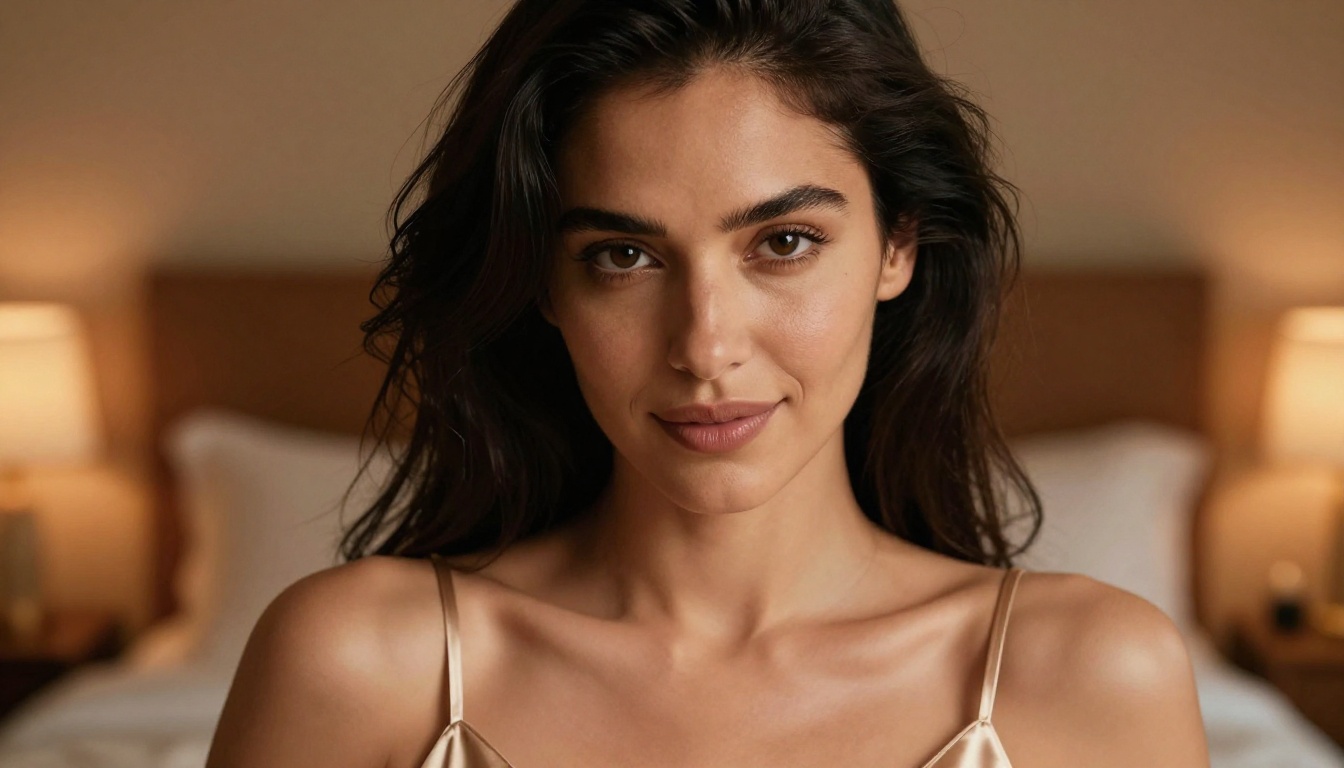
Hunyuan Image 2.1 and similar models have also improved dramatically at following complex prompt instructions, rendering specific clothing details, poses, and environments with fidelity that earlier models simply couldn't manage. This prompt-following accuracy makes the personalization loop even more effective, letting users dial in exactly what they want across multiple iterations.
Why Mainstream AI Platforms Say No
The filter problem
Most major AI platforms, including those built on the same underlying models that power NSFW tools, apply safety filters that block adult content entirely. These filters serve real purposes. They protect platforms from legal liability in jurisdictions with strict content laws, prevent exposure to minors, and satisfy advertisers and app store policies.
But these filters also create a direct opening for platforms that choose not to apply them. Every user who wants to generate content that mainstream tools reject becomes a potential customer for alternatives that allow it. The demand doesn't disappear when a filter is applied. It redirects.
The opt-out market
The result is an opt-out market. Users who hit a restriction on one platform don't stop wanting to generate that content. They move to a platform that allows it. This dynamic means every content policy enforcement action on a mainstream platform is simultaneously a user acquisition event for unrestricted alternatives.
| Platform Type | Content Policy | User Experience |
|---|
| Mainstream AI (ChatGPT, Gemini) | Strict filters, adult content blocked | Safe, limited |
| Moderated adult platforms | Age-verified, explicit content allowed | Flexible, verified |
| Unrestricted generators | No filters, all content types | Maximum freedom, variable safety |

Creative Freedom and Artistic Expression
Where art and desire intersect
Not all NSFW AI usage is about personal gratification. A meaningful portion of users are artists, writers, and content creators working in genres that have always included adult themes. Romance novelists use AI to generate book artwork. Adult content creators on subscription platforms use image generation tools to produce content more efficiently. Concept artists working on mature-rated games and films use these tools for ideation.
For these professional and semi-professional users, the appeal isn't voyeuristic. It's practical. AI removes the cost and logistics of photoshoots, model fees, and post-production. It lets a single creator produce volume that previously required a team.
Why creators choose unrestricted tools
Creative professionals working in adult content genres need tools that match their subject matter. A romance illustration that's sensual, a character design that's meant to be provocative, a fantasy scene that pushes artistic limits: these are legitimate creative outputs with real commercial markets. Restricted tools that block these outputs are simply not useful for these creators.
The commercial ecosystem around adult content is large and largely legal in most jurisdictions. Creators in this space need professional tools, and AI provides them at a fraction of the cost of traditional production.

Digital Companionship and Emotional Connection
The loneliness factor
One of the less-discussed drivers of NSFW AI adoption is loneliness. In a period of rising social isolation, particularly among young adults in many Western countries, AI companions offer a form of connection that's available on demand, non-judgmental, and patient.
This isn't primarily about explicit content for many users in this category. It's about having something that responds to them, that seems to care about what they say, that's physically attractive in a way that feels personal. The NSFW element is one feature of a broader intimacy experience that also includes conversation, personality, and consistent availability.
💡 For users dealing with loneliness or social anxiety, AI companions offer a form of connection that feels real enough to reduce isolation, without the risk of rejection.
When AI fills a gap
Whether AI companionship is a healthy coping strategy or a substitute that delays real social development is a genuinely contested question. But from a pure usage-motivation standpoint, the answer is clear: users adopt these tools because they fill a gap. The gap might be temporary, geographic, related to disability, or rooted in deeper social difficulty. The specific cause varies. The result is the same: AI provides something that real-world options currently don't.
The Safety Question
What responsible platforms do differently
The growth of NSFW AI has brought legitimate safety concerns with it. The most serious involve the potential for generating non-consensual imagery of real people, deepfake abuse, and accidental exposure to minors. These aren't hypothetical risks.
Responsible platforms address these risks through age verification, terms of service that explicitly prohibit non-consensual imagery, and technical measures that prevent recreating identified real individuals. The distinction between platforms that take safety seriously and those that don't is meaningful, both ethically and legally.
The regulatory landscape
Governments in the EU, UK, and several US states have begun regulating AI-generated adult content, particularly around age verification and non-consensual deepfakes. The EU AI Act includes provisions relevant to synthetic media. In the US, several states have passed laws specifically targeting non-consensual AI-generated intimate imagery.
This regulatory pressure is reshaping the market. Platforms operating legally in this space are building compliance infrastructure. Those that don't are facing increasing legal exposure. The result, counterintuitively, may be a market that becomes safer over time as legal frameworks mature and irresponsible actors face consequences.
Create Your Own Images on PicassoIA

If you want to generate stunning, photorealistic images without the restrictions that most platforms impose, PicassoIA gives you access to over 90 text-to-image models in a single platform. Here's how to get started generating images that actually match your vision:
Step 1: Choose your model
Head to the text-to-image collection and pick a model based on what you want to produce. For photorealistic results with strong prompt accuracy, GPT Image 2 delivers exceptional detail. For high-resolution 4K output with cinematic quality, Wan 2.7 Image Pro is the right pick. For fast generation with strong aesthetic quality, Seedream 4.5 hits a great balance between speed and fidelity.
Step 2: Write a detailed prompt
The quality of your output is directly tied to the specificity of your prompt. Be precise about:
- Subject: Who or what is in the image, including physical details
- Setting: Location, time of day, specific background elements
- Lighting: Natural or artificial, direction, warmth, intensity
- Camera: Focal length, aperture, angle of shot
- Film style: Grain type, color palette, overall mood
A prompt like "a woman in a silk dress by an open window, soft morning light from the left, 85mm f/1.4 lens, Kodak Portra 400 film grain, photorealistic 8K" will produce far better results than "pretty woman in a nice dress."
Step 3: Iterate and refine
Don't expect perfection on the first generation. Run the prompt, evaluate what comes back, then adjust specific elements. Change the lighting description. Modify the pose. Add texture details. Each iteration gets you closer to exactly what you visualized. The iteration loop on PicassoIA is fast enough that you can try five to ten variations in a few minutes.
Step 4: Upscale and sharpen
Once you have an image you're satisfied with, use PicassoIA's super-resolution tools to upscale it to print quality. The platform also offers inpainting to fix specific areas and outpainting to expand the canvas in any direction, giving you full control over the final result.
Whether you're a creative professional working in mature genres, an artist who wants complete control over visual output, or simply curious what today's AI image generation can produce, PicassoIA gives you the tools to find out. The models are there. The quality is there. The only limit is what you describe.


