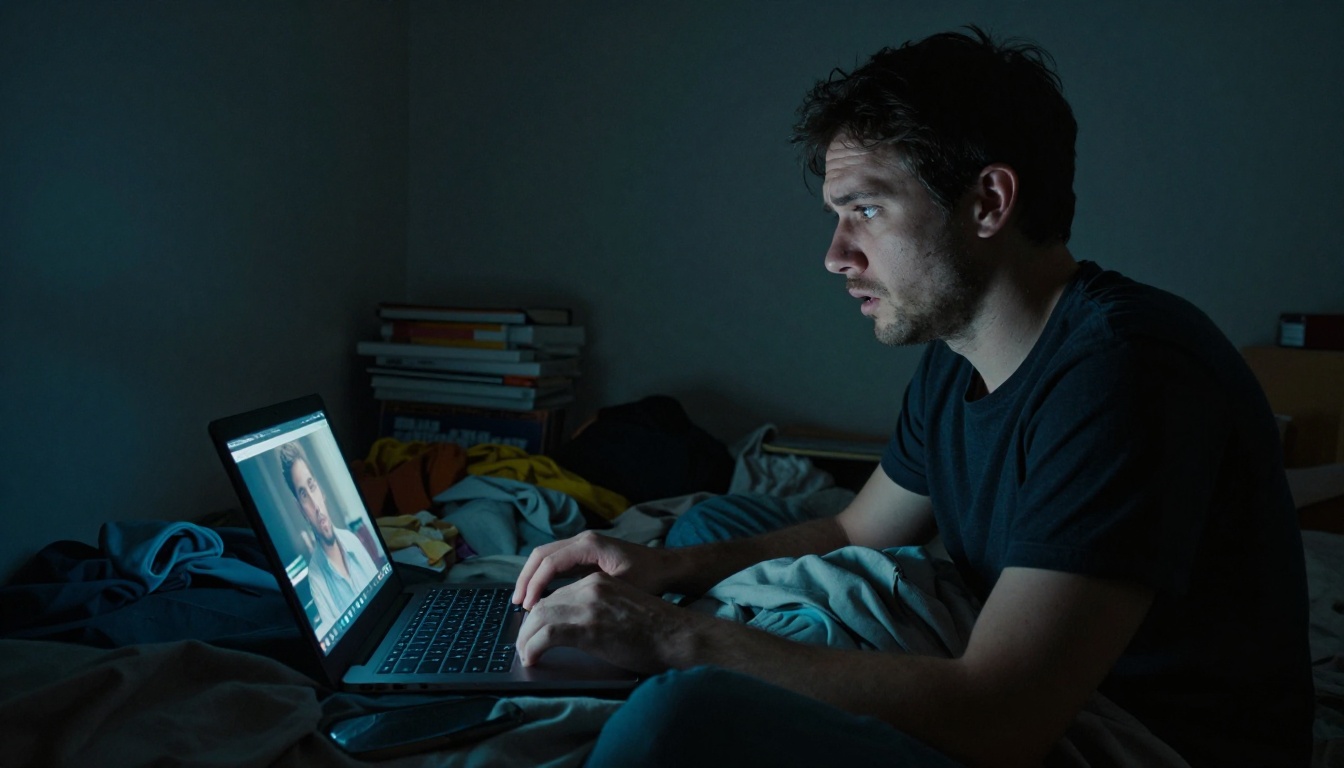
Someone sent you a video. A politician you trust says something outrageous. A celebrity is doing something they would never do. A friend appears in footage that makes your stomach turn. You watch it twice. Three times. And you can not tell if it is real.
That moment of doubt is exactly what makes AI deepfakes so terrifying. The fear is not paranoid or irrational. It is grounded in documented harm that has already reached millions of people across every walk of life. And the technology driving it is only getting more capable.
The Tech Got Very Good, Very Fast
It did not happen overnight, but it happened faster than most people expected. Deepfake technology in 2016 required days of computing time, hundreds of training images, and still produced blurry, glitchy results that any careful viewer would spot. By 2025, anyone with a consumer-grade laptop and free tools can produce something that fools professional journalists at first glance.
The jump in quality is staggering. Generative Adversarial Networks (GANs) and now diffusion models have made synthetic face generation extraordinarily convincing. The same AI architecture that powers legitimate portrait tools can produce fabricated media at scale. What once required a Hollywood budget now costs nearly nothing.
From Blurry to Photorealistic in 8 Years
The early deepfakes were obvious. Faces blurred at the edges. Eyes blinked wrong. Lighting did not match between the face and background. Today's systems handle all of that automatically. Current AI models analyze lighting direction, skin texture, and facial muscle movement at a microscopic level. The results pass casual observation by the vast majority of people who see them.
Research from MIT's Media Lab found that humans correctly identify deepfakes only slightly better than chance when the videos are high quality. The technology has genuinely outpaced our natural ability to detect it.
Voice Cloning Makes It Worse
A convincing fake video is alarming. A convincing fake video with your voice is catastrophic. Voice cloning AI can now replicate a person's vocal characteristics from as little as three seconds of audio. Phone calls, voicemails, videos from your own social media feed. All of it becomes training data.
Financial scams using voice cloning have increased by over 400% since 2022 according to the Federal Trade Commission. Callers impersonating family members in fake emergencies have extracted millions from people who had no reason to doubt what they heard.

5 Reasons Deepfakes Frighten People
The fear around deepfakes is not abstract. It is grounded in documented harms that have already affected real people. Here is what is driving the anxiety.
Non-Consensual Intimate Content
This is where deepfakes cause the most direct, individual harm. The majority of deepfake videos online are non-consensual sexual content featuring real people who never agreed to appear in them. Studies suggest 96% of deepfake videos online fall into this category, and 99% of the targets are women.
The victims range from global celebrities to private individuals, teachers, students, and coworkers. The psychological damage is severe and documented. Many victims describe the experience as a form of sexual violation because their likeness and identity was used without consent in an intimate context. In many jurisdictions, it was not even illegal until recently.
Political Disinformation
A fake video of a world leader declaring war. A fabricated clip of a candidate saying something racist. A synthetic speech from a respected official that contradicts their actual policies.
The political applications of deepfakes are genuinely dangerous. Researchers call this the "October Surprise" threat: a convincing deepfake released days before an election, not enough time for fact-checkers to fully debunk it before millions have already voted. The damage does not require the video to be believed indefinitely. Just long enough.
Identity Theft at Scale
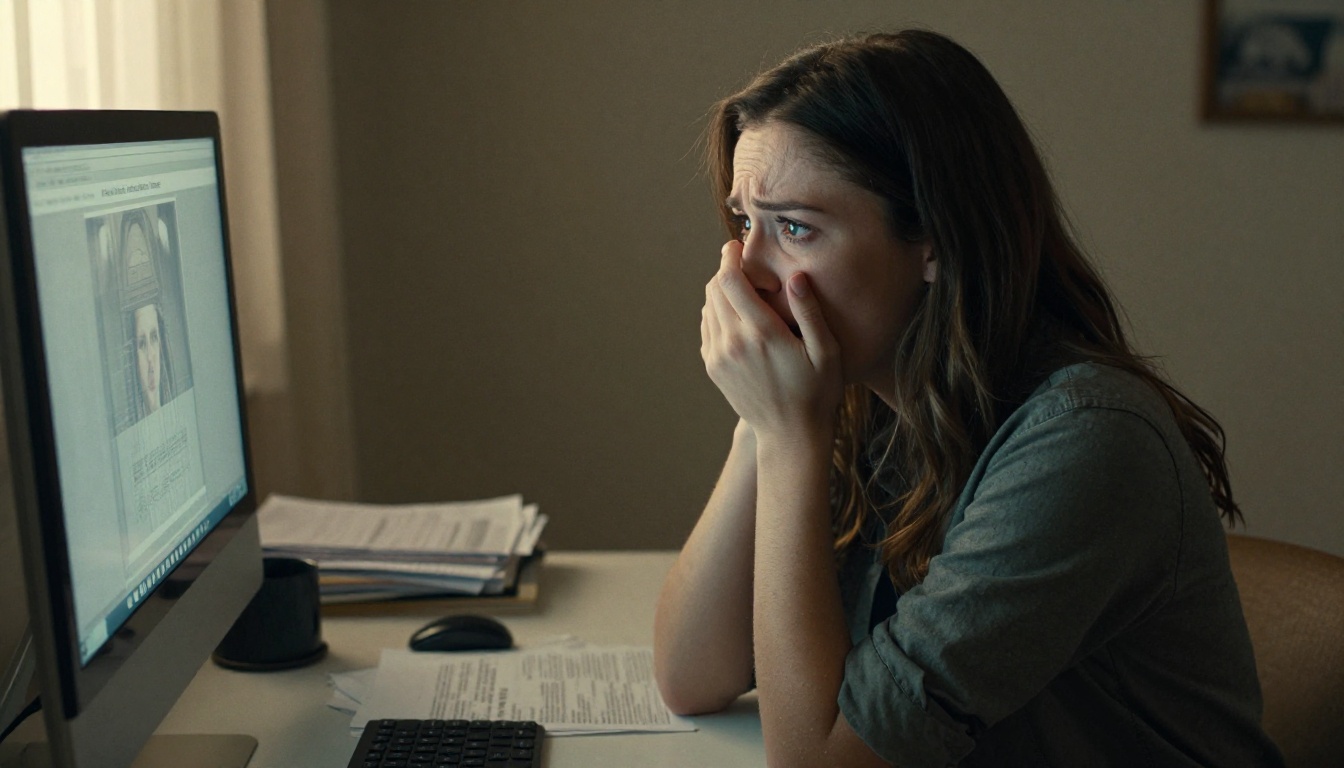
Your face is unique to you, but it is publicly available in thousands of photos across social media, professional profiles, news articles, and video. Deepfake technology can take that public information and weaponize it against you.
Consider what becomes possible: fake identification documents, fabricated video confessions, synthetic footage placing you at locations you never visited. People have lost jobs, custody battles, and reputations because of synthesized media depicting them falsely.
Financial Fraud That Works
In 2024, a finance worker in Hong Kong was tricked into transferring $25 million USD to fraudsters who used a deepfake video call. The worker participated in what appeared to be a legitimate video conference with colleagues and a company executive. Every person on that call was fabricated.
This is not an isolated incident. Corporate fraud using AI-synthesized faces and voices is now a recognized threat category. Insurance companies are creating new products specifically to cover deepfake-related financial losses.
The "Liar's Dividend"
Perhaps the most insidious effect is not the fake content itself. It is what happens to real content in a world where deepfakes exist.
When people know that any video could be fabricated, genuine damaging footage becomes deniable. A politician caught on video saying something problematic can simply claim it is a deepfake. A real recording of misconduct becomes just another thing to doubt. The mere existence of deepfake technology gives bad actors a new weapon: the ability to call real things fake.
Who Gets Targeted Most
Deepfakes do not target everyone equally. The distribution of harm follows predictable patterns based on public visibility, gender, and political exposure.
Women Bear the Worst of It
The statistics are not subtle. Across every study examining deepfake content distribution, women are the overwhelming majority of targets for non-consensual synthetic media. This is not accidental. It reflects the same dynamics behind other forms of online harassment, amplified enormously by technology that makes fabrication trivially easy.
The targets include female celebrities, female politicians, female journalists, and private individuals. Women in public-facing professions report that the threat alone, regardless of whether content is actually created, functions as a form of intimidation that changes their behavior online and off.
Politicians and Public Figures
Anyone with significant public visibility is a target simply because the necessary training data is publicly available. Politicians face an additional risk: synthetic media designed not just to humiliate them personally, but to change voter behavior and political outcomes.
Several elections in Southeast Asia, Europe, and the United States have already involved suspected deepfake content. The sophistication increases with each election cycle.

Regular People, Too
The assumption that deepfakes only affect the famous or powerful is wrong. As the technology becomes cheaper and more accessible, its use in personal vendettas, stalking, harassment, and intimate partner abuse is increasing rapidly.
Anyone who has posted photos publicly, which is most people who use social media, has provided enough training data. You do not need to be famous to become a target.
Can You Actually Spot a Deepfake?
This question gets asked constantly, and the honest answer is: sometimes, but less reliably than people hope.
What to Look For
There are still tell-tale signs in lower-quality deepfakes. A trained eye can sometimes catch:
- Inconsistent blinking: Too fast, too slow, or completely absent
- Lip sync errors: Slight delays or mismatches between audio and mouth movement
- Unnatural hair edges: Individual strands tend to blur or smear at the perimeter
- Ear inconsistencies: Ears are notoriously difficult for AI to render consistently
- Background anomalies: Warping at the edges of the frame near the face
- Lighting mismatch: The face is lit differently from the surrounding environment
| Signal | Reliability | Notes |
|---|
| Blinking pattern | Medium | Newer models have largely solved this |
| Hair texture at edges | High | Still a consistent weakness |
| Ear rendering | Medium | Inconsistent across models |
| Lighting coherence | High | Hard to fake convincingly |
| Skin texture | Low | Mostly solved by current models |

AI Detection Tools
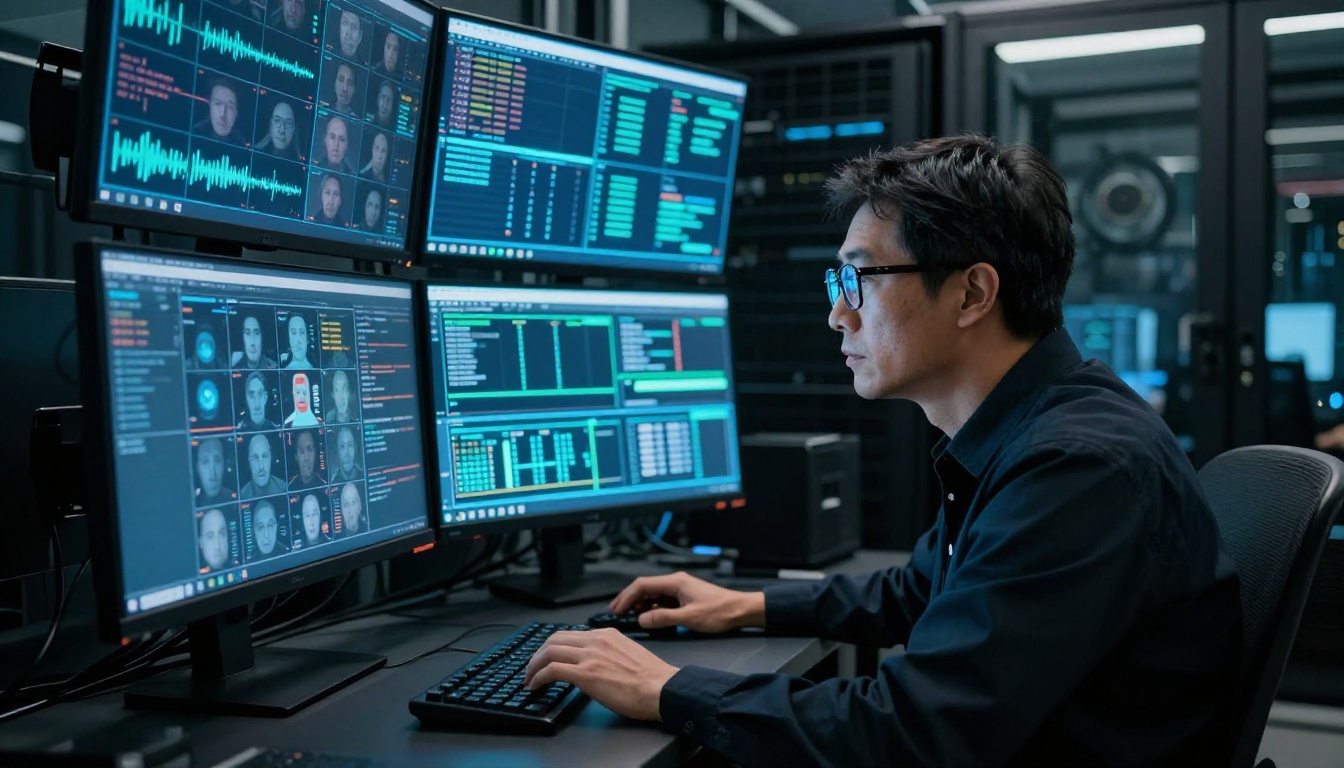
Several companies now offer deepfake detection software. Microsoft's Video Authenticator, Sensity AI, and Intel's FakeCatcher have all shown promising results in controlled testing environments. The challenge is that detection models trained on today's deepfakes will be outpaced by tomorrow's generation tools. It is an ongoing technical arms race.
Note: No detection tool is 100% reliable. Treat them as one signal among several, not a definitive verdict. Use your judgment alongside the tool.
Laws Are Catching Up (Slowly)
Legal frameworks around deepfakes are developing, but they vary enormously by jurisdiction and still leave major gaps.
What Countries Are Doing
The United States has passed the DEEPFAKES Accountability Act and several states have enacted laws specifically targeting non-consensual intimate deepfakes. The UK's Online Safety Act includes provisions addressing this content. The European Union's AI Act includes requirements for transparency around AI-generated content, including mandatory labeling of synthetic media.
China has some of the most comprehensive deepfake regulations currently in force, requiring disclosure of synthetic content and prohibiting politically manipulative deepfakes.
| Region | Status | Coverage |
|---|
| United States | Partial, state-level variation | NCII, election interference |
| European Union | AI Act in force | Transparency, labeling |
| United Kingdom | Online Safety Act | Harmful synthetic content |
| China | Comprehensive | Political, NCII, disclosure |
| Most countries | None or minimal | Significant gaps remain |
The challenge is enforcement. Deepfakes can be created anywhere and distributed globally in seconds. National laws struggle to address a fundamentally borderless problem.

The Other Side of AI Faces
It would be incomplete to discuss deepfake fears without acknowledging the other side of the technology. The same AI systems that produce harmful synthetic media also power entirely legitimate, creative applications.
Where AI Image Tools Create Real Value
Portrait generation, artistic photomanipulation, restoration of damaged historical photographs, film visual effects, and accessibility tools for people with disabilities all rely on related technology. The AI that can swap a face can also de-age an actor for a film, restore a century-old photograph, or create a digital avatar for someone who has lost their voice.
The technology is not inherently harmful. Its application and context determine the outcome.
Responsible AI in Creative Work
Platforms focused on legitimate creative AI have built meaningful safeguards into their systems. With tools like Flux 2 Pro, Flux 2 Max, and GPT Image 1.5, creators can generate photorealistic portraits, artistic compositions, and conceptual imagery without targeting real people without consent.
The distinction matters: AI image generation for creative purposes, where the output is clearly artistic and does not involve fabricating content about real people without their consent, operates in an entirely different space from malicious deepfake production.
Models like Flux 2 Dev and Flux Schnell are used by photographers, digital artists, and marketing teams to produce original visual content every day. Flux 1.1 Pro Ultra offers ultra-realistic image generation built for professional creative work. These tools represent what the technology looks like when purpose and consent align.
What You Can Do Right Now
Fear without action is exhausting. Here is what is actually within your control.
Protect your own data:
- Audit your public photo presence on social media
- Use platform privacy settings to limit who can access your images
- Be selective about video footage you share publicly
When you receive suspicious content:
- Slow down before sharing. The first instinct is to forward shocking content immediately
- Check the source. Where did the video actually originate?
- Look for the tells described above. Even imperfect detection is better than none
- Use a detection tool as a secondary check
Advocate for change:
- Support legislation targeting non-consensual synthetic content
- Report deepfake content when you encounter it on platforms
- Treat victims with the same seriousness you would extend to victims of any other form of abuse
Remember: Healthy skepticism about digital content is appropriate. Paralysis is not. The goal is informed caution, not refusing to believe anything you see.
See What AI Can Actually Create
The deepfake conversation is dominated by worst-case scenarios, and those scenarios deserve serious attention. But AI image generation in responsible, creative contexts tells a completely different story.
If you want to see what AI can do when it is pointed at beautiful, original, artistic work instead of manipulation, there is no better way than trying it yourself. On Picasso IA, you can generate striking photorealistic portraits, dramatic landscapes, artistic compositions, and creative concepts using the same category of technology discussed in this article.
Try generating an image with Flux 2 Pro or GPT Image 1.5 and you will see immediately that the same AI capable of causing harm is also capable of creating something genuinely beautiful. The technology does not choose its use. People do.
That awareness, holding both the risks and the possibilities in mind at the same time, is what makes the difference between fear and informed engagement with one of the most significant technologies of our time.