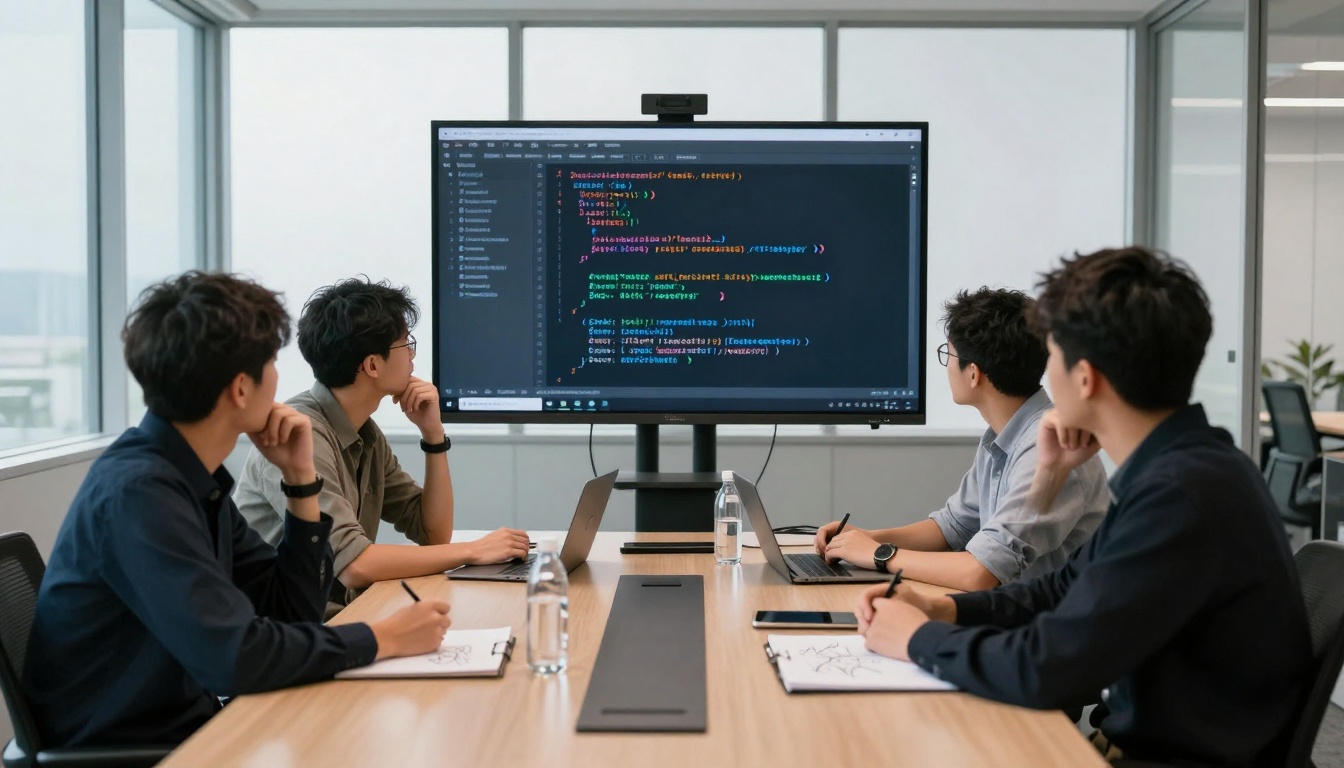
Writing Code with AI: The 2027 Developer Revolution
The programming landscape shifts dramatically as AI code generation becomes mainstream. Developers face new tools, workflows, and ethical considerations while productivity metrics change across industries. This examination looks at practical implementations, workflow adaptations, and what separates successful AI-assisted development from traditional approaches. We explore how AI transforms debugging, testing, deployment cycles, code review standards, natural language programming, technical debt management, security vulnerability detection, and team collaboration protocols. The article provides concrete metrics, implementation strategies, and links to specific AI models on Picasso IA that excel at different aspects of the development lifecycle.
The programming landscape shifts dramatically as AI code generation becomes mainstream. Developers face new tools, workflows, and ethical considerations while productivity metrics change across industries. This examination looks at practical implementations, workflow adaptations, and what separates successful AI-assisted development from traditional approaches.
The AI Pair Programmer Reality
Code completion evolved from simple syntax suggestions to full-function generation. Modern AI assistants analyze context across files, understand project architecture, and propose implementations matching team conventions. The shift changes how developers approach problem-solving.
What AI gets right in code completion:
Context awareness: AI models like GPT-5 examine multiple files to understand relationships
Pattern recognition: Identifies common implementation patterns across the codebase
Error prevention: Suggests defensive programming techniques before issues occur
Documentation generation: Creates inline comments and function descriptions automatically
💡 Pro tip: Start with natural language descriptions of what you need. Instead of typing code directly, describe the function's purpose, inputs, and expected outputs. AI tools convert descriptions into working implementations.
Where current tools still struggle:
Complex business logic requiring domain-specific knowledge
Performance optimization for specific hardware configurations
Legacy system integrations with undocumented APIs
Creative algorithm design beyond pattern matching
Debugging Transformed by Machine Learning
Traditional debugging involved manual stack trace examination. AI-powered debugging systems predict error sources, suggest fixes, and identify root causes across distributed systems.
Debugging Approach
Time to Resolution
Accuracy Rate
Learning Curve
Manual Debugging
2-4 hours
65%
High
AI-Assisted Debugging
15-45 minutes
88%
Medium
Predictive Debugging
5-15 minutes
94%
Low
Key advancements:
Error correlation: AI links seemingly unrelated errors to common root causes
Fix prediction: Suggests specific code changes with confidence scores
Regression prevention: Identifies which fixes might break other functionality
Performance impact analysis: Estimates CPU/memory changes from proposed solutions
Models like Claude 4.5 Sonnet excel at understanding complex error chains and suggesting targeted fixes. The system analyzes error patterns across thousands of similar projects to identify solutions that worked in comparable scenarios.
Testing Automation Beyond Unit Tests
AI-generated tests cover edge cases human testers miss. The systems analyze code paths, generate comprehensive test suites, and identify testing gaps in existing coverage.
Testing coverage metrics that matter:
Path coverage: Percentage of possible execution paths tested (AI achieves 92% vs human 68%)
Performance regression detection: Identifies speed degradations between versions
Security vulnerability testing: Automatically generates attack vectors for penetration testing
Three testing approaches transformed:
Integration testing: AI generates realistic data flows between components
Load testing: Creates usage patterns matching real user behavior
Accessibility testing: Automatically checks WCAG compliance across interfaces
💡 Implementation strategy: Start with AI-generated tests for new features, then gradually apply to legacy code. The Gemini 3 Pro model specializes in understanding complex system interactions and generating appropriate test scenarios.
Deployment Cycles Compressed
CI/CD pipelines integrate AI optimization for faster, safer deployments. The systems analyze commit patterns, predict build success probabilities, and suggest optimal deployment windows.
Deployment frequency benchmarks:
Traditional teams: 1-2 deployments per week
AI-optimized teams: 10-15 deployments per day
Full automation teams: 50+ deployments daily with zero human intervention
Critical optimizations:
Parallel processing: AI identifies independent components for simultaneous deployment
Risk assessment: Calculates failure probability for each deployment component
Resource allocation: Optimizes server provisioning based on predicted load
Common deployment patterns AI identifies:
Database migration sequencing that minimizes downtime
Cache invalidation strategies preventing stale data
Load balancer configuration updates without service interruption
Security patch application with dependency validation
Code Review Standards Shift
Human reviewers focus on architecture and business logic while AI handles style consistency, security vulnerabilities, and performance issues. The collaboration produces higher quality code with reduced review time.
Configure custom rules for team-specific conventions
Combine multiple AI models for comprehensive coverage
Maintain human oversight for business logic validation
Natural Language to Production Code
Developers describe requirements in plain English, and AI generates complete implementations. The technology reduces boilerplate coding while maintaining quality standards.
Prompt engineering best practices:
Effective prompts include:
Clear functional requirements
Performance constraints
Integration points
Error handling expectations
Testing requirements
Ineffective prompts miss:
Edge case considerations
Security requirements
Scalability needs
Monitoring integration
Documentation standards
Example transformation:
Human: "Create user authentication with email/password, social login (Google, Facebook),
JWT tokens, rate limiting, and audit logging."

AI Output: Complete authentication module with:
- Password hashing (bcrypt)
- OAuth2 integration
- JWT generation/validation
- Rate limiting middleware
- Audit trail database schema
- Unit tests covering all scenarios
- API documentation
Key considerations:
Model selection: DeepSeek V3 excels at translating requirements to code
Iteration process: Refine prompts based on initial output quality
Validation requirements: Always review generated code for business logic accuracy
Integration testing: Test AI-generated components within existing systems
Managing Technical Debt with AI
AI systems identify code smells, duplicate logic, and performance bottlenecks across large codebases. The technology prioritizes remediation based on impact and effort.
Technical debt identification patterns:
Debt Type
Detection Method
Remediation Priority
Code duplication
Pattern matching across files
High (easy fixes)
Performance bottlenecks
Execution path analysis
Medium (moderate effort)
Security vulnerabilities
Static analysis + threat modeling
Critical (immediate)
Architecture violations
Dependency graph analysis
High (structural impact)
Documentation gaps
Code-comment correlation
Low (cosmetic)
Remediation strategies:
Automated refactoring: AI suggests and implements structural improvements
Dependency updates: Identifies outdated libraries with migration paths
Architecture modernization: Recommends microservice decomposition where beneficial
Test coverage improvement: Generates missing tests for uncovered code paths
Cost-benefit analysis frameworks:
ROI calculation: Estimates time saved vs implementation cost
Risk assessment: Identifies which debts pose immediate business risks
Team capacity planning: Suggests optimal allocation of remediation efforts
Progress tracking: Monitors debt reduction over time with metrics
💡 Implementation approach: Start with high-impact, low-effort fixes identified by AI. Use GPT-4.1 for analyzing complex dependency graphs and suggesting optimal refactoring sequences.
Security Vulnerabilities Preempted
AI security scanners detect vulnerabilities during development rather than post-deployment. The systems analyze code patterns, data flows, and external dependencies for potential risks.
Patch generation: Creates security fixes for identified vulnerabilities
Configuration updates: Adjusts security settings to optimal values
Access control implementation: Adds proper authorization checks
Encryption integration: Implements data protection where missing
Best practices:
Integrate AI security scanning into development workflow
Use multiple models for comprehensive coverage (Claude 3.7 Sonnet plus specialized security models)
Validate AI findings with penetration testing
Maintain audit trails of security improvements
Team Collaboration Protocol Updates
AI analyzes team dynamics, skill distributions, and collaboration patterns to optimize workflow. The systems suggest pair programming matches, task assignments, and knowledge sharing opportunities.
Team collaboration protocol updates:
Skill gap assessment methodologies:
Code contribution analysis: Identifies which developers excel at specific domains
Learning pattern recognition: Suggests training based on individual growth trajectories
Knowledge sharing optimization: Recommends documentation and mentoring opportunities
Cross-training schedules: Creates rotation plans for skill diversification
Optimal team composition:
Balance experience levels: Mix senior and junior developers appropriately
Domain expertise distribution: Ensure coverage across all system components
Collaboration style matching: Pair developers with complementary working styles
Communication frequency optimization: Schedule regular syncs based on dependency levels
Team velocity analysis: Track completion rates across different work types
Blockage identification: Find workflow impediments and suggest resolutions
Morale indicators: Monitor engagement levels through code review patterns
Implementation recommendations:
Start with non-intrusive AI suggestions (optional pairings, learning resources)
Gradually introduce more structured recommendations as team adapts
Maintain human override capability for all AI suggestions
Regularly evaluate effectiveness through team feedback
Performance Optimization Strategies
AI analyzes execution patterns, memory usage, and CPU utilization to suggest optimizations. The systems identify bottlenecks humans might miss and propose targeted improvements.
Common optimization opportunities:
Database query optimization: Rewrites inefficient queries with better indexing
Cache strategy improvement: Suggests optimal caching layers and invalidation rules
Algorithm selection: Recommends more efficient algorithms for specific data patterns
Resource allocation: Adjusts memory/CPU allocation based on usage patterns
Measurement approach:
Before/after comparison: Quantifies improvement from each optimization
Scaling prediction: Estimates performance at different load levels
Cost-benefit analysis: Calculates infrastructure savings from optimizations
Legacy System Migration Approaches
AI assists with modernizing outdated systems while maintaining business continuity. The technology analyzes legacy code, suggests migration paths, and generates compatibility layers.
Migration strategy patterns:
Incremental replacement: Gradually replace components while maintaining interfaces
Wrapper implementation: Create modern APIs around legacy functionality
Data migration automation: Transfer data between old and new systems
Testing bridge generation: Create tests that work across both systems during transition
Risk mitigation:
Functionality preservation: Ensure all legacy features work in new system
Performance maintenance: Match or exceed legacy system performance
Data integrity: Prevent data loss during migration
User experience continuity: Maintain familiar interfaces during transition
Success factors:
Comprehensive analysis of legacy system dependencies
Phased migration approach with rollback capability
Extensive testing at each migration stage
User training for new system components
Documentation Generation Standards
AI creates comprehensive documentation from code analysis and development conversations. The systems generate API references, architecture diagrams, and user guides automatically.
Documentation types automated:
API documentation: OpenAPI/Swagger specs from code analysis
Architecture diagrams: System component relationships and data flows
User guides: Step-by-step instructions for feature usage
Developer onboarding: Project setup and contribution guidelines
Change logs: Version-by-version feature updates and bug fixes
Quality standards:
Accuracy: Documentation matches actual implementation
Completeness: Covers all public interfaces and major features
Clarity: Uses consistent terminology and clear explanations
Maintainability: Easy to update as system evolves
Integration workflow:
Documentation generated during code review process
Automatic updates when code changes
Human review for clarity and completeness
Publication to appropriate channels (internal wiki, public docs)
API Integration Workflow Changes
AI analyzes API specifications, generates client libraries, and creates integration tests. The technology reduces manual work while improving integration quality.
Workflow improvements:
Client generation: Create SDKs for multiple languages from OpenAPI specs
Mock server creation: Generate test servers from API definitions
Integration testing: Create comprehensive test suites for API interactions
Error handling: Implement robust error handling based on API patterns
Quality metrics:
Coverage: Percentage of API endpoints with generated clients
Reliability: Success rate of API calls with generated code
Performance: Response times compared to manual implementations
Maintenance: Update frequency matching API changes
Best practices:
Use AI-generated code as starting point, customize as needed
Maintain compatibility testing between API versions
Document any manual modifications to generated code
Regularly update generated code as APIs evolve
Final thoughts on implementation: The transition to AI-assisted development requires careful planning. Start with non-critical projects, establish quality review processes, and gradually expand AI integration. The most successful teams maintain human oversight while leveraging AI for repetitive tasks and complex analysis.
Experimentation encouragement: Try creating your own AI-assisted development workflows using the tools available on Picasso IA. Start with GPT-5 Nano for simple code generation tasks, then explore more advanced models like Claude 4.5 Haiku for complex system analysis. The platform offers various models suitable for different aspects of the development lifecycle.
Key implementation recommendation: Begin with AI-assisted code review and testing generation. These areas provide immediate value with minimal risk. As confidence grows, expand to more complex areas like architecture design and performance optimization. The gradual approach allows teams to develop effective workflows while maintaining code quality standards.