If you've spent any time searching for a solid anime AI chat platform, you've probably encountered both YumeAI and Soulfun. They both promise immersive conversations with anime-style AI characters, and they both have vocal fan communities. But they are not the same product, and picking the wrong one can mean spending hours in a chat experience that doesn't match what you were actually looking for.
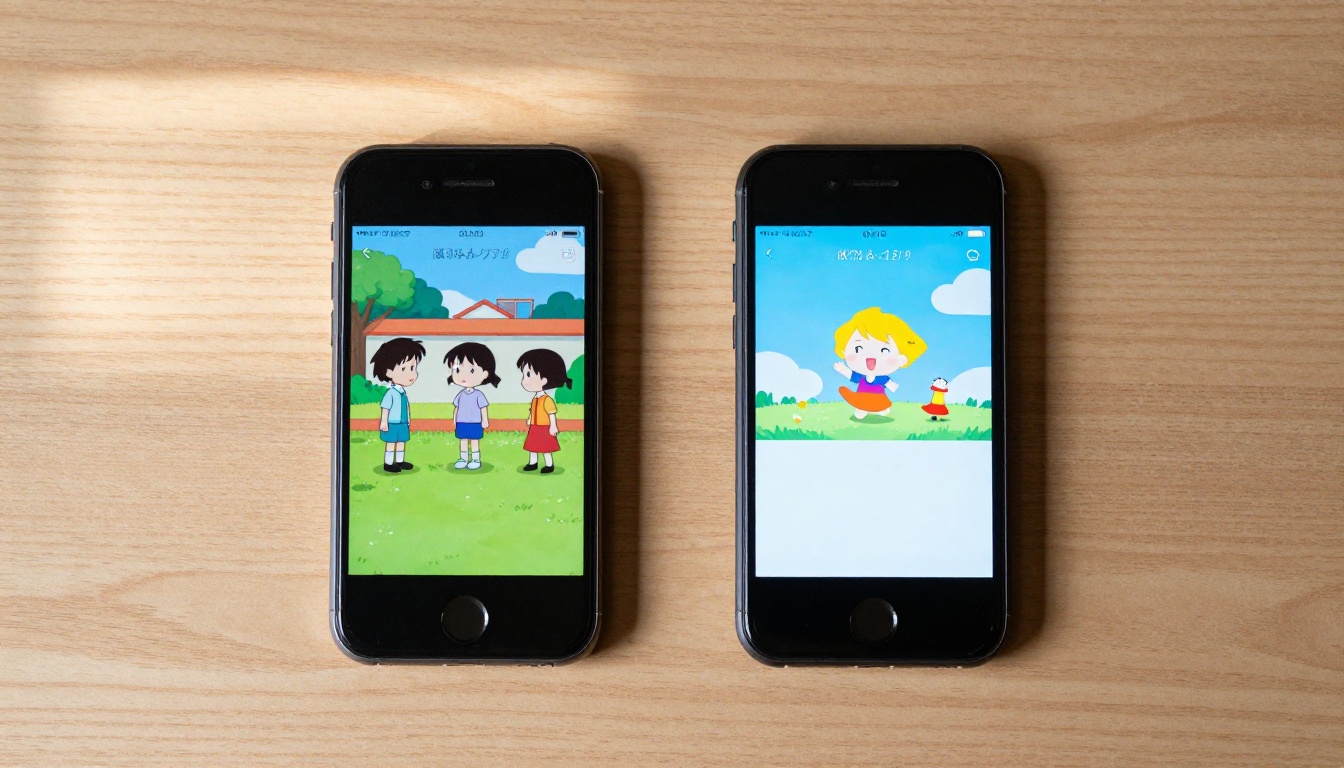
This breakdown goes beyond the surface. It covers character depth, response quality, memory systems, voice output, and the underlying large language models that power each platform. By the end, you'll have a clear read on which app actually serves you better.
What YumeAI Actually Is
YumeAI is a mobile-first anime AI chat app built around a curated roster of pre-designed anime characters. Users pick a character, start a conversation, and the AI maintains a consistent persona throughout that interaction. The focus is on accessibility: low friction to get started, colorful anime art, and a reasonably responsive chat loop.
The Character Roster
YumeAI ships with dozens of characters covering standard anime archetypes: the cold-but-caring rival, the energetic childhood friend, the mysterious transfer student, the stoic warrior. Each character comes with a defined backstory, a pre-set personality, and an aesthetic that matches their archetype.
The positive side of this approach is consistency. When you chat with a specific YumeAI character, the response style stays on-brand. The downside is that you're choosing from a fixed catalog. There's no creation tool to build your own persona from scratch, which frustrates users who want something tailored to their vision.

Voice and Personality Depth
YumeAI integrates voice output for many of its characters. The voices are pre-recorded or lightly synthesized, which means they can feel repetitive during longer sessions. Personality depth is decent but shallow compared to newer platforms: characters respond to direct questions well, but they don't maintain long-term memory across separate sessions.
💡 Worth noting: YumeAI works best for users who want a low-setup, drop-in chat experience. If you want something you can shape and build on over time, the next section is where things get interesting.
What Soulfun Does Differently
Soulfun takes a more ambitious angle. It positions itself as a creative companion platform where users build relationships with AI characters they can customize. Instead of picking from a pre-built roster, users define their character's appearance, personality traits, speech patterns, and backstory. The result is a more personal product but with a steeper initial investment.
Deep Customization Options
Soulfun's character builder lets you set personality sliders (introvert vs. extrovert, serious vs. playful, warm vs. cold), define a backstory, and choose a voice style. This level of control makes Soulfun appealing to users who have a specific character archetype in mind that YumeAI doesn't offer.
The tradeoff: the initial setup takes time. If you want to get into a good conversation quickly, Soulfun's customization phase can feel like homework before the fun part begins.

Conversation Memory and Continuity
This is where Soulfun genuinely pulls ahead. The platform includes a memory layer that logs relationship milestones, previously shared information, and context from prior sessions. When you return to a conversation after a few days, the character can reference things you told it before. This creates a sense of continuity that YumeAI's session-based approach simply cannot match.
That said, Soulfun's memory is not perfect. It occasionally confuses context or applies memories in the wrong conversational frame. But even imperfect cross-session memory is significantly more satisfying than none.
5 Real Differences at a Glance
Here's a direct side-by-side on the points that matter most:
| Feature | YumeAI | Soulfun |
|---|
| Character Creation | Fixed catalog only | Full custom builder |
| Memory System | Session-only | Cross-session memory |
| Voice Output | Pre-recorded / basic synthesis | Customizable voice styles |
| Setup Time | Under 1 minute | 5 to 15 minutes |
| Roleplay Depth | Moderate | High |
| Free Tier | Yes, limited | Yes, limited |
| Personality Control | Pre-set per character | Full sliders and text input |
Neither platform is strictly better in every column. YumeAI wins on friction and speed. Soulfun wins on depth, memory, and control.

The LLM Powering Each Chat
Neither YumeAI nor Soulfun publicly discloses exactly which large language models run under the hood. What users can observe is response quality, coherence, and how well each model maintains persona during extended conversations.
Model Quality Matters More Than the App Wrapper
The best anime AI chat experiences are built on top of genuinely capable LLMs. When the base model is weak, character personas fall apart: the AI breaks character, gives generic filler responses, or forgets conversational context mid-session. When the base model is strong, the character feels real even in complex emotional conversations.
This is why LLM selection underneath any chat app is critical. On platforms where you have direct model access, you see dramatic quality differences between lightweight models and frontier-class models like GPT 5, Claude Opus 4.7, or Gemini 3 Pro.
💡 Why this matters: If you're building or evaluating an AI chat product, the persona layer is only as strong as the model underneath it. A well-written system prompt on a weak model still produces mediocre conversations.
Based on community observations, YumeAI appears to use a fine-tuned version of a mid-tier open model. Soulfun's responses, particularly in their premium tier, suggest something closer to GPT-4-class quality. Neither can match what you get from running Claude 4 Sonnet or GPT 4o directly with a custom persona system prompt.

Open Models vs. Closed Models in Chat AI
There's an interesting split in how chat AI platforms handle their model stack. Some choose open-weight models like Llama 4 Maverick Instruct or Kimi K2 Instruct because they can be fine-tuned and run on their own infrastructure without per-call API costs. Others use frontier closed models for better baseline quality.
Open models give platforms more customization control and lower per-conversation cost. Closed frontier models deliver better out-of-the-box coherence, especially for emotionally nuanced conversations. The ideal architecture is a fine-tuned open model with frontier-class benchmarks, which is technically hard to achieve on a consumer chat product budget.
The reason this matters in a YumeAI vs Soulfun comparison is that model quality explains much of the difference in conversation satisfaction between their free and paid tiers.
Voice and Speech: Who Sounds Better
Both platforms include voice features, but they work differently and produce noticeably different results.
YumeAI Voice System
YumeAI uses pre-packaged voice clips for its characters with some synthesis layer to extend them into longer phrases. This ensures character voices feel consistent with the aesthetic but can sound robotic during natural back-and-forth conversation. Emotional nuance is limited: happy, sad, and neutral are about the full range you get.
Soulfun Voice System
Soulfun uses a more dynamic text-to-speech layer that adapts to conversational context. The voices respond to emotional cues in the text, which makes longer conversations feel less mechanical. Premium tier users get access to noticeably better voice models.

For context on what modern AI voice synthesis can do: platforms with direct model access offer tools like ElevenLabs V3, which produces highly natural expressive speech from any text input, and Minimax Speech 2.8 HD, which delivers studio-quality audio at scale. Both are well ahead of what either YumeAI or Soulfun currently ships in their bundled voice features.
If voice quality is a priority for your AI chat experience, the current anime chat apps are not yet at the frontier. The gap between their built-in TTS and what's available via dedicated speech synthesis models like Inworld Realtime TTS 2 is significant.
💡 Tip: If you want to pair a custom AI character conversation with genuinely high-quality voice, building the voice layer separately with a dedicated TTS model produces much better results than relying on a chat app's bundled synthesis.
Naturalness in AI conversation is hard to define objectively but immediately obvious when it's missing. It comes down to three things: response coherence, persona consistency, and how the model handles emotionally complex inputs.
Response Coherence
Both platforms handle simple, direct questions well. Both start to show seams during long conversations, especially when the user introduces contradictory information or steers the conversation in an unexpected direction. Soulfun handles topic transitions better. YumeAI tends to snap back to its character's pre-defined archetype when confused.

Persona Consistency
This is Soulfun's strongest area. The custom persona system means the AI has explicit instructions about who it is, and the memory layer reinforces this over time. YumeAI's pre-built characters are consistent in a narrower sense: they stay on-theme but don't deepen.
Handling Emotional Complexity
Both platforms struggle here, but in different ways. YumeAI tends to deflect or oversimplify emotionally heavy topics because its characters are built around specific archetypes with limited flexibility. Soulfun can go deeper but sometimes overcorrects by shifting into a supportive tone rather than staying in character.
This is where having access to a frontier LLM directly, like Gemini 3.5 Flash or Deepseek R1 with a carefully crafted system prompt, would outperform both apps on nuanced emotional conversations. The app layer adds convenience but strips model capability.
Who Should Pick Which App
The answer depends on what you're actually optimizing for.
Pick YumeAI if:
- You want to start chatting immediately with no setup
- You're happy with a fixed selection of anime archetypes
- Voice consistency matters more to you than voice realism
- You're on a tight data or device budget
Pick Soulfun if:
- You want to define your own character from scratch
- Long-term relationship continuity matters to you
- You're willing to spend 10 to 15 minutes on initial setup
- You want more emotional depth in conversations over time

Neither app is the right answer for power users who want full model control, custom persona engineering, and access to frontier speech synthesis. For that use case, a platform with direct model access is the better path.
Build Your Own Anime AI Experience
If the comparison above left you feeling like both YumeAI and Soulfun are close but not quite what you need, there's a more direct route. PicassoIA gives you access to the actual LLMs and TTS models that power the best AI chat experiences, without an app layer sitting between you and the model.
Here's what's available directly on the platform:
For the conversation layer, you can run frontier chat models like GPT 5, Claude Opus 4.7, or lighter fast models like Gemini 3.5 Flash with your own system prompt. You write the character, set the rules, and the model responds at full capability with no persona wrapper limiting it.
For voice output, models like ElevenLabs V3 and Inworld Realtime TTS 2 produce character voices that are genuinely difficult to distinguish from recorded audio. Minimax Speech 2.8 HD adds studio-quality output if you want the cleanest possible voice layer.
For visuals, if you want to visualize the character you're chatting with, PicassoIA has over 91 text-to-image models ready to generate photorealistic or stylized character portraits. You build the visual, the voice, and the conversation layer with full control over each component.
This approach takes more initial work than downloading YumeAI or Soulfun. But it delivers a ceiling that neither app can match. The character is yours, the model quality is at the frontier, and you're not dependent on a platform's decision about what gets locked behind a paywall next week.
Start by browsing the full model collection on PicassoIA. Pick a model, write a short character description as a system prompt, and send your first message. The quality difference compared to a pre-packaged anime chat app is immediately clear.


