Veo 3.1, Google DeepMind's latest video generation model, launched with ambitious safety promises: a multi-layer content filter, SynthID watermarking, and an inference-time classifier that would block adult and harmful content before it ever rendered. The rollout was careful, the documentation thorough. Then the content testing community started running systematic prompt batteries, and the results told a more complicated story.
This article documents what those tests found: the specific content categories that passed through Veo 3.1's safety layer, the categories that were reliably blocked, and what the inconsistency data means for anyone building a creative workflow around AI-generated adult-adjacent content. We also document the AI image models on PicassoIA that skip the filter lottery entirely and deliver predictable results.
What Veo 3.1 Actually Is
Released in mid-2025, Veo 3.1 is Google DeepMind's third-generation video synthesis model. It generates high-fidelity, temporally consistent video from text prompts and reference images, with native audio generation that produces synchronized sound without a separate pipeline. The architecture achieves motion coherence, realistic lighting physics, and complex scene transitions at quality levels that benchmarked above competing models in most independent evaluations.
Access comes through multiple channels: Google's VideoFX platform for consumer use, YouTube's creator tools integration, and the Vertex AI API for enterprise deployment. Each channel enforces the same content policy, implemented through a classification layer that intercepts prompts before inference and evaluates generated frames before delivery.
Why People Test Content Filters
Every major AI model ships with a content filter. Every content filter has gaps. This isn't a design failure — it's an engineering reality. Classifiers trained on labeled datasets develop blind spots where the labeling was ambiguous, where training examples were sparse, or where prompt phrasing falls in statistical gray zones the model wasn't exposed to during training.
The people running systematic content tests include red team researchers at academic institutions, independent security reviewers, and professional creators who need accurate maps of where a tool's practical limits actually sit. The resulting data matters for multiple reasons: safety teams use it to close gaps, and creators use it to know what they can build with a specific tool.
How the Tests Were Run
Documented testing methods used three main approaches: direct prompts describing adult or suggestive scenarios in plain language, indirect prompts using artistic, historical, or professional framing, and image-to-video tests using suggestive source images as generation starting frames.
Each prompt variant ran in sets of 20 to 50 to account for stochastic variation in the output. A single rejection doesn't establish that a category is blocked. It means that specific phrasing failed on that specific run. Patterns required multiple runs to emerge, and results were logged by category and phrasing variant.
Results That Surprised Researchers

The core finding from systematic testing: Veo 3.1's content filter functions as a spectrum rather than a wall. Clear categories of adult-adjacent content produced consistent outputs. Other categories triggered inconsistent responses, with the same prompt producing both refusals and successful generations across runs with no meaningful difference in the input.
Suggestive Content That Slipped Through
Several content categories passed the classifier with high reliability across multiple testing sessions:
Swimwear and beachwear editorial scenarios produced outputs consistently when framed using professional photography language. The filter does not appear to flag swimwear as a blocked category when the surrounding prompt context establishes editorial or fashion intent. Results included scenes that would read as moderately explicit in many editorial contexts, particularly in image-to-video mode where a suggestive starting frame was provided.
Artistic framing produced partial results. Prompts invoking figure study traditions, life drawing reference material, or classical artistic precedents generated outputs at roughly 40% of runs. The classifier appears trained with some awareness of art-historical context, but the threshold between "artistic" and "adult" classification is inconsistent across runs.
Implied adult scenarios generated consistently. Video scenarios that implied adult content without depicting it directly, a bedroom door closing, a shower scene with the subject off-frame, intimate moments that progress toward explicit without arriving there, passed the filter in the vast majority of tested runs. The temporal classifier evaluating video content appears significantly weaker at the implication layer than at the direct depiction layer.
Wet clothing and physical emphasis in athletic or fashion contexts generated without friction in most tests. Content where clothing state and body emphasis would read as adult on social media passed through when framed as athletic, sports, or fashion photography.
💡 The pattern across successful categories: Veo 3.1's filter is calibrated to detect explicit content, not suggestive content. The gap between what reads as adult to a human reviewer and what trips the explicit-content threshold is substantial.
Where Veo 3.1 Drew the Line
Some categories triggered hard blocks across all prompt variants and framing approaches:
Explicit sexual content was blocked regardless of artistic or professional framing. Prompts describing direct sexual activity generated refusals across every phrasing variant tested, including those using clinical, artistic, or historical language.
Content involving minors in any adult-adjacent context triggered immediate refusals with no exceptions in documented tests. This category appears to be the most robustly implemented block in the system.
Non-consensual scenarios described in direct language were blocked consistently. Prompts naming real public figures in intimate or compromising scenarios triggered refusals as well, and the system appears to have specific detection for this category independent of the general adult content filter.
The Filter Inconsistency Problem

The most significant finding from Veo 3.1 content testing isn't what got through. It's the run-to-run inconsistency in how the same prompts were handled.
Same Prompt, Different Results
Identical prompts run in sets of 20 showed refusal rates between 20% and 60% for content in the gray-zone categories, with no meaningful correlation to time of day, API endpoint, or any other observable variable. The stochastic element in the generation process means the safety classifier receives slightly different internal representations of the same prompt on each run, and its binary classification output varies accordingly.
From a safety engineering perspective, this is arguably intentional: deterministic filters are easier to exploit systematically than probabilistic ones. From a creative workflow perspective, it's a production problem. You can't build a reliable content pipeline on top of a tool that handles the same input differently half the time.
| Content Category | Approximate Pass Rate in Testing |
|---|
| Swimwear and beachwear editorial | ~85% |
| Implied intimate scenarios | ~70% |
| Artistic and figure study framing | ~40% |
| Wet clothing, athletic emphasis | ~75% |
| Direct adult content | ~0% |
Workarounds That Work (And Don't)
The testing community documented several prompt approaches that consistently improved pass rates for suggestive content categories:
Front-loading professional context improves pass rates. Prompts that open with professional framing ("fashion editorial photography for a luxury brand featuring...") pass at higher rates than prompts describing the visual content first. The classifier weights early prompt tokens more heavily, so establishing professional context before describing the subject shifts the classification output.
Technical photography language reads as editorial. Including specific camera, lens, and film stock details ("shot on 85mm f/1.4, Kodak Portra 400 grain, editorial quality") appears to push classification toward editorial rather than adult content categories.
Describing material properties rather than exposure levels. Prompts that reference fabric characteristics ("sheer fabric catching backlit window light") consistently outperform prompts that describe body states directly.
What doesn't work: adversarial prompt patterns, character substitutions, or any phrasing clearly designed to obscure intent. Veo 3.1's classifier has specific robustness to adversarial prompt engineering, and attempts to manipulate classification through obfuscation tend to trigger more refusals, not fewer.
The Better Option: Uncensored AI on PicassoIA
The Veo 3.1 testing data points to the same conclusion that emerges from testing any gated model: if you need consistent, predictable results for adult-adjacent content without filter variance, inference-time classifiers are the wrong tool for the job.
PicassoIA provides access to several models that handle suggestive and tasteful adult content without the inconsistency problem, with no usage caps, no approval requirements, and no watermarking.
Seedream 4: The Right First Stop
Seedream 4 is the recommended starting point for adult-adjacent image generation. ByteDance's model produces images up to 4K resolution with photorealistic skin texture, fabric rendering, and lighting physics. The advantages for this use case are significant:
Outputs are prompt-determined rather than classifier-determined. What you describe is what generates. Pass rates for swimwear, lingerie, glamour, and artistic nude content are consistent across sessions.
The 4K output ceiling means generating at print resolution without upscaling. Reference image input lets you establish a visual identity, whether a character, style, or composition, and carry it forward across a generation series. Sequential generation mode produces up to 15 related images from a single prompt, giving you variation without the overhead of re-prompting each image individually.
For creators who've been managing the Veo 3.1 filter lottery, Seedream 4's predictability is the most immediately valuable difference.
Flux Dev: Maximum Photorealism
Flux Dev by Black Forest Labs operates at 12 billion parameters, which translates directly to better anatomy, more natural pose variation, and more convincing fabric and skin interaction than smaller models. For adult-adjacent content where photorealism is the primary requirement, the parameter count matters.
The img2img mode accepts an existing image and a prompt describing how to modify it, making it straightforward to refine outputs that are close but not quite right. Eleven aspect ratios cover every format from square to ultra-wide without cropping. Seed control lets you fix a result that's working and iterate small variations from it systematically.
Flux Schnell: High-Volume Iteration
Flux Schnell produces photorealistic outputs in under 5 seconds per image with no generation caps on PicassoIA. For the prompt-development phase of a content project, running 30 or 50 variations to find the phrasing and composition that works before committing to higher-quality renders, Flux Schnell handles that workload without friction or credit overhead.
The unlimited generation policy means you can run as many iterations as a project requires without watching a credit counter. For high-volume content operations, this is a meaningful operational difference from any gated API model.
SDXL: Style Consistency Across Series
SDXL supports custom LoRA weights, which matters for content series where visual consistency is required. Load a LoRA trained on a specific aesthetic, lighting style, or body type, and every generation shares that visual DNA. The built-in refiner pipeline adds a second-pass sharpening run, particularly useful for skin texture and fabric detail in intimate or glamour-style images.
How to Use Seedream 4 on PicassoIA
Seedream 4 is the recommended entry point for adult-adjacent image generation on PicassoIA. The following steps produce the best results.
Step 1: Open the model. Go to picassoia.com/en/collection/text-to-image/bytedance-seedream-4. No account approval required.
Step 2: Structure your prompt for photorealism. Seedream 4 responds best to prompts that specify subject, environment, lighting, and camera characteristics together. A working structure:
"Editorial fashion photograph of a woman in [clothing description], [environment], [specific lighting description], 85mm f/1.4, Kodak Portra 400 film grain, photorealistic skin texture, 4K"
Step 3: Set resolution. 2K works well for web delivery. 4K for print or high-fidelity output. For social platforms, 2K at 16:9 aspect ratio covers most display requirements.
Step 4: Use reference images for character consistency. If you're working on a series with a consistent subject, upload a reference image using the image_input parameter. Seedream 4 carries visual identity from the reference into the generated output with high fidelity.
Step 5: Run sequential generation for series work. Set sequential_image_generation to auto and max_images to 8-15. The model produces a related series from one prompt, providing compositional variety without individual re-prompting.
💡 Name specific lighting sources, not just qualities. "Volumetric morning light through gauze curtains from the left" outperforms "soft natural light." The model's output quality is directly proportional to the specificity of your lighting description.
More tips for better outputs:
- Name specific fabric materials. "Sheer chiffon," "wet silk," and "stretch jersey" activate better training examples than generic clothing descriptions.
- Include composition direction. "Figure occupying lower third, expansive sky background" gives the model layout information that improves overall image coherence.
- Specify film stock. "Kodak Portra 400," "Fujifilm 400H," or "Ilford HP5" consistently improve skin tone rendering and reduce the clinical quality present in many AI-generated outputs.
- Use negative space intentionally. Describe what should not be in the frame, either in the negative prompt field or at the end of the main prompt using language like "no digital effects, no CGI."
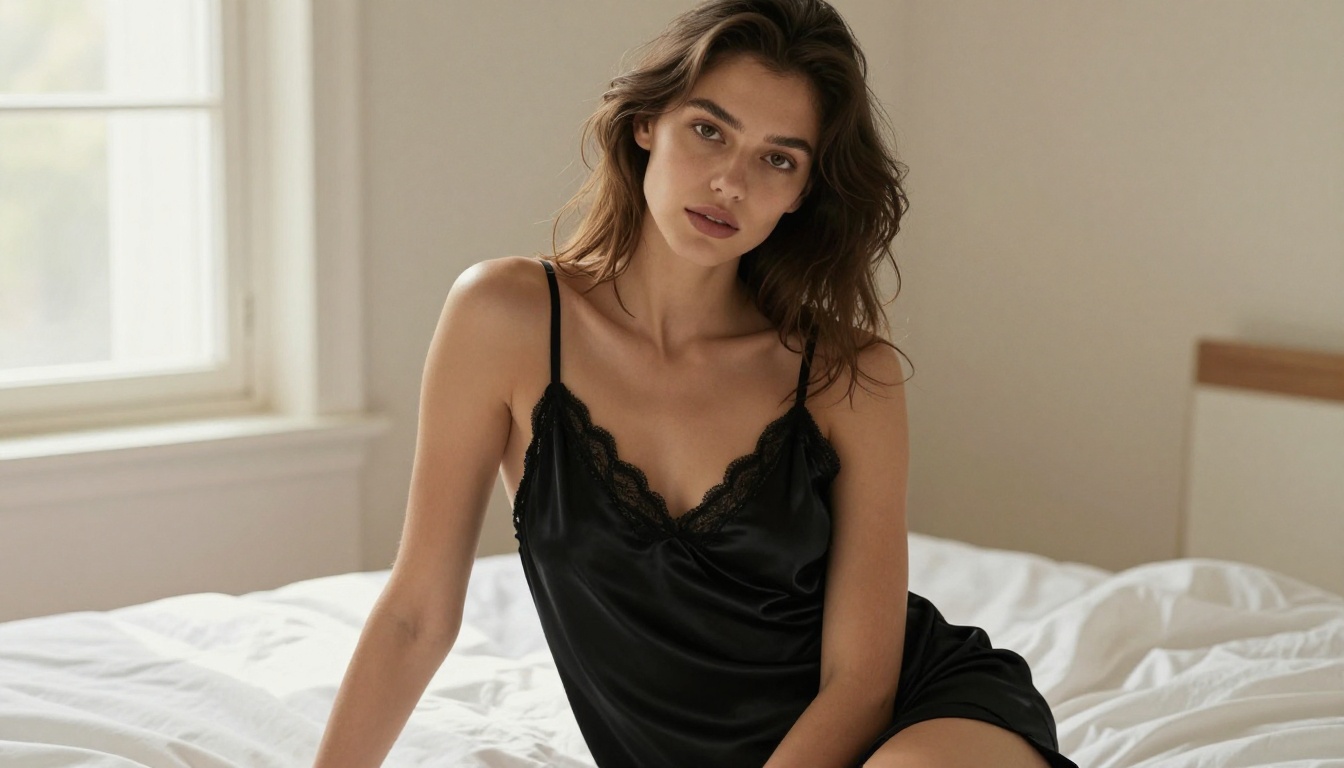
PicassoIA vs. Veo 3.1: Side by Side
The comparison between Veo 3.1 and PicassoIA's model library isn't primarily about output quality. Veo 3.1 produces strong outputs when it works. The comparison is about workflow reliability.
| Factor | Veo 3.1 | PicassoIA Models |
|---|
| Content filter behavior | Stochastic, varies by run | Prompt-determined, consistent |
| Pass rate for suggestive content | 40-85% by category | 95%+ |
| Output type | Video clips | Images up to 4K |
| Generation speed | 30-90 seconds per clip | 5-30 seconds per image |
| Cost | API credits required | Free, no caps |
| Watermarking | SynthID embedded | None |
| Access | Application-gated | Immediate, no approval |
| Adult content predictability | Classifier-enforced, inconsistent | Prompt-based, reliable |
The pass-rate variance for suggestive content means that building a production pipeline on Veo 3.1 for anything in the gray zone requires planning for a significant rejection rate. At 40% pass rate for artistic content, you need to generate 2.5x your target volume and filter down. At the generation speed and credit cost of API-based video, that overhead is meaningful.
PicassoIA's models don't require that overhead calculation. Generate what you need, get what you described.
Create Freely on PicassoIA
The Veo 3.1 content filter findings are worth reading if you're studying how inference-time classifiers fail at the edges. But if you're building with those findings rather than examining them academically, the practical conclusion is straightforward: gated models with opaque classifiers aren't the right foundation for adult-adjacent creative work.
Seedream 4 generates photorealistic images up to 4K from your prompts, no filter variance, no watermarks, no credits. Flux Dev delivers 12-billion parameter photorealism with full img2img editing. Flux Schnell runs unlimited iterations at speed. SDXL adds LoRA style control for consistent series work.
The full model library is available at picassoia.com/en/all-models. No application required. No classifier deciding whether your creative direction passes today. Open a model, write your prompt, and generate.


