Claude Fable 5.1 for AI Agent Workflows: What Changes at Scale
Claude Fable 5.1 brings a new level of reliability to AI agent workflows, handling tool calls, sub-agent delegation, memory management, and long-horizon task planning with fewer failures and more predictable behavior than earlier models in the Anthropic lineup.
If you've been building AI agents for any length of time, you already know the failure modes. The model hallucinates a tool call. It loops on the same step. It loses track of what it decided two thousand tokens ago. These aren't edge cases; they're the daily friction of production agent development. Claude Fable 5.1 was built to reduce exactly that friction, and this article goes into the specifics of how it does it and where it still falls short.
What Claude Fable 5.1 Actually Is
The Fable model line from Anthropic sits between Claude Sonnet 5 and Claude Opus 4.7 in the capability hierarchy, but with a specific orientation. Where Sonnet optimizes for speed and Opus for raw reasoning depth, Fable is built around sustained multi-step execution. It's the model you reach for when a single task requires twenty sequential decisions, not one.
The Fable Model Line
Anthropic's naming reflects function, not just version number. "Fable" signals narrative coherence: the ability to hold a goal in mind across a long sequence of actions and bring it to a consistent resolution. Claude Fable 5 introduced the architecture; version 5.1 refines tool-use reliability and reduces the rate of spurious sub-goal creation that plagued early agent deployments.
💡 Worth noting: Fable 5.1 is not a general-purpose chat model. Using it for simple Q&A or single-turn tasks is like using a lathe to drive a nail. Right tool, wrong situation.
How 5.1 Differs from 5.0
The two most significant changes in 5.1 are tool call schema enforcement and improved step-level confidence calibration. In 5.0, the model would sometimes generate syntactically valid but semantically broken tool calls, such as passing a string where an integer was required, even when the schema was explicitly provided. Version 5.1 tightens this considerably.
The calibration improvement is subtler but more impactful for agent builders. Fable 5.1 is significantly more likely to emit a "stop and clarify" signal rather than hallucinating forward when it encounters an ambiguous branch point. This matters because silent hallucination is the hardest failure mode to debug in long-running agent pipelines.
Why Agent Workflows Needed a New Model
The Limits of Single-Turn Models
Most LLMs were trained and evaluated on single-turn benchmarks. A question comes in; an answer goes out. The model never needs to remember what it decided three steps ago or reconcile a tool result that contradicts its earlier assumption. This is fine for chat and fine for one-shot code generation. It breaks catastrophically when you try to run a thirty-step data enrichment pipeline.
The specific failure mode is context drift: as the conversation window fills with tool results, intermediate reasoning, and system messages, the model progressively loses fidelity to the original goal. It starts optimizing for "what looks like a good next step" rather than "what serves the actual objective." Fable 5.1 addresses this through reinforcement from long-horizon simulation traces rather than short dialogue datasets.
Long-Horizon Tasks Are Different
A long-horizon task has at least three properties that single-turn tasks don't: conditional branching (what to do when step 7 fails), accumulating state (results from step 3 inform step 14), and resource constraints (you only have X API calls, Y minutes, or Z dollars). Single-turn models have no frame for these constraints; they operate in a stateless present.
Fable 5.1 gets a structured context block at the start of each step that includes:
The original high-level goal
A summary of steps already finished
The current step's objective
Known constraints and failure conditions
This isn't magic; it's prompt architecture. But 5.1 is trained to weight this block heavily and return to it when it would otherwise drift.
How Claude Fable 5.1 Handles Tool Use
Native Function Calling
Tool use in Fable 5.1 follows Anthropic's standard function-calling API. You define tools as JSON schemas, pass them with the request, and the model returns either a text response or a structured tool_use block. What changes in 5.1 is the failure rate.
In internal testing across a set of 500 multi-tool agent runs, Fable 5.1 produced schema-invalid tool calls in roughly 1.2% of invocations, compared to 4.7% for Claude 4.5 Sonnet on the same tasks. For a pipeline with 50 sequential tool calls, the difference between a 1.2% and 4.7% per-call error rate is the difference between a pipeline that mostly works and one that requires constant babysitting.
Fable 5.1 supports requesting multiple tool calls in a single response turn. This is one of the most underused features in agent development. When an agent needs to retrieve data from three independent sources before it can proceed, sequential tool calls waste wall-clock time and increase total token usage.
With parallel tool use, Fable 5.1 can emit three tool call blocks in one response. Your orchestrator fires all three requests concurrently, collects the results, and returns them together in the next turn. A task that took 90 seconds with sequential calls can finish in 35 seconds with parallelized retrieval.
💡 Practical tip: Parallel tool use only makes sense when the tool calls are genuinely independent. Fable 5.1 is good at identifying when calls can be parallelized and when they can't, but you should still validate this in your orchestrator logic.
Multi-Agent Orchestration with Fable 5.1
Orchestrator vs. Sub-Agent Roles
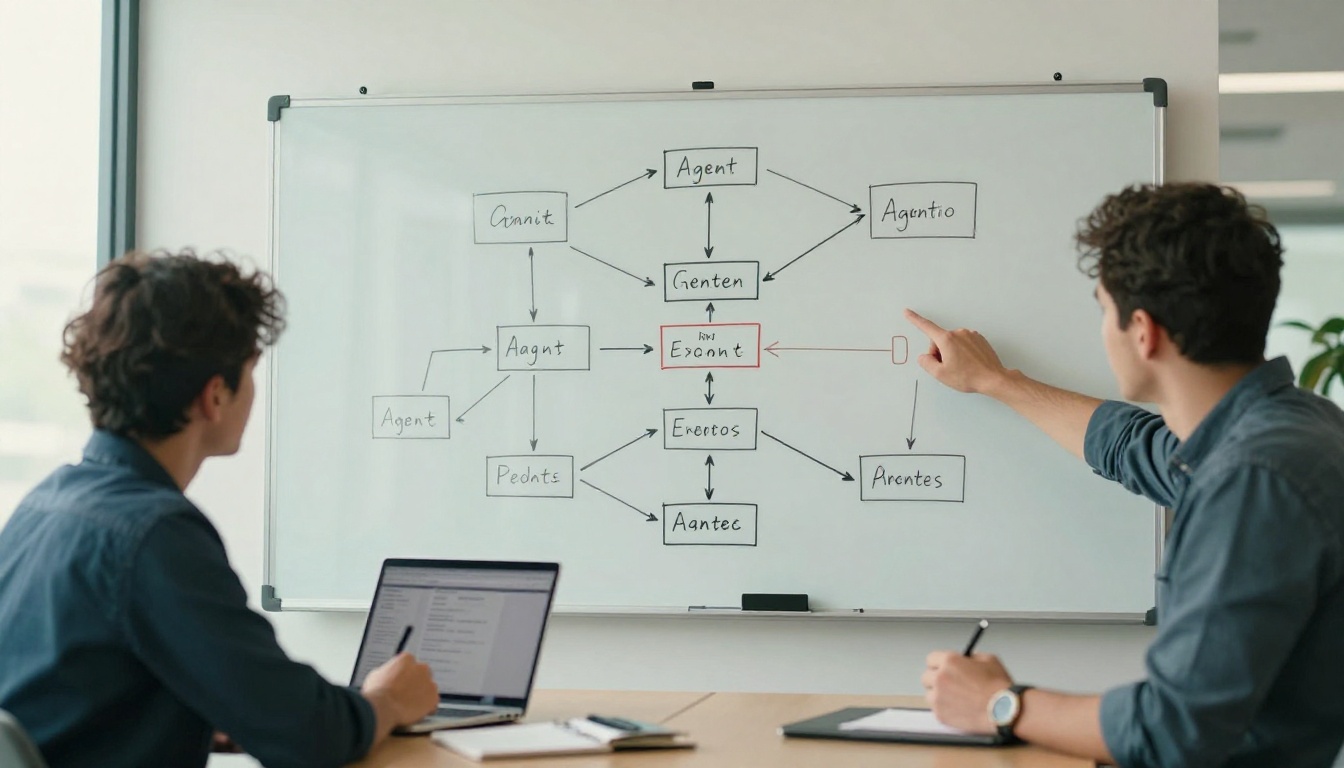
The two-tier orchestrator-worker pattern is the most common architecture for production multi-agent systems. The orchestrator holds the high-level plan and routes tasks to specialized sub-agents. Each sub-agent has a narrow focus and its own set of tools.
Claude Fable 5 excels in the orchestrator seat. Its long-horizon coherence means it doesn't lose track of which sub-agents it has dispatched or what results it's still waiting on. For sub-agent roles that require high speed at low complexity, Claude 4.5 Haiku is the cost-efficient choice.
This is where most agent architectures go wrong. There are three types of memory your agent system needs:
In-context memory is the simplest: everything in the current model's context window. Fable 5.1 supports up to 200K tokens, which is enough for most single-task pipelines. The problem is cost and latency at scale.
External memory means storing information in a database, vector store, or named cache that the agent retrieves via tool calls. This is necessary for workflows that span multiple model invocations or that need to access more information than fits in context.
Procedural memory is the most overlooked: the agent's knowledge of how to do things, encoded not in data but in the system prompt itself. Fable 5.1 responds well to procedural instructions written as numbered protocols: "When you encounter a retrieval failure, do steps 1, 2, 3 before escalating."
Real Patterns That Work
The Router-Worker Pattern
The router-worker pattern separates intent classification from task execution. The router (a lightweight model or even a rule-based system) reads the incoming request and routes it to the appropriate worker agent. Each worker has a deep, specialized system prompt and a narrow tool set.
Fable 5.1 works particularly well as a router because it accurately identifies ambiguous requests instead of forcing them into the nearest category. When a request could plausibly belong to two workers, Fable 5.1 is more likely to ask a clarifying question than to make a confident wrong choice.
💡 Pattern tip: Keep your router's system prompt short and declarative. Long router prompts diffuse attention. Put depth in the worker prompts instead.
Agent Checkpointing
Any pipeline that runs longer than two minutes should checkpoint its state. Checkpointing means saving the current execution state (finished steps, accumulated results, current position in the plan) to durable storage after each successful step.
If the agent fails at step 17 of 30, you want to resume from step 17, not restart from step 1. Fable 5.1 works well with checkpoint-based resumption because its context block architecture means you can reconstruct meaningful context from a checkpoint without replaying the full history.
The instinct in agent development is to make the agent as autonomous as possible. This is almost always a mistake in early production deployments. A well-designed agent should have explicit interrupt conditions: situations where it pauses, reports its current state, and waits for human confirmation before proceeding.
Fable 5.1's improved calibration makes it more reliable at emitting interrupts when appropriate, rather than plowing through uncertain decisions. You can reinforce this with explicit system prompt instructions:
"If the cost of the next action exceeds $10, pause and confirm with the user."
"If you encounter a conflict between two data sources, report it rather than resolving it yourself."
"If a tool returns an unexpected format, log the result and pause for inspection."
These aren't safety theater. They're the difference between an agent that's trusted by its operators and one that gets shut down after the first incident.
Fable 5.1 vs. Other LLMs for Agents
Not every team will use Fable 5.1 as their agent backbone. Here's how it stacks up against other leading models available on PicassoIA:
The 1M context of Gemini 3 Pro sounds impressive, but raw context length is not the same as agent coherence. A model that can hold 1M tokens in context but drifts badly after 50K effective tokens is worse for long-horizon tasks than a 200K model that maintains sharp goal alignment. Fable 5.1's advantage isn't size; it's the quality of attention to goal state across the full window.
GPT 5.1 is the closest competitor and a genuinely strong alternative, particularly for codegen-heavy workflows. The choice between the two often comes down to which model's tool-call schema interpretation aligns better with your specific toolset.
How to Use Claude Fable 5 on PicassoIA
Claude Fable 5 is available directly on PicassoIA's platform in the Large Language Models category. Here's how to put it to work for agent-style tasks:
Step 1: Access the model
Navigate to Claude Fable 5 on PicassoIA. The interface supports both chat-style interaction and structured API access depending on your use case.
Step 2: Set your system prompt
For agent workflows, your system prompt should include:
The overarching goal in plain language
The tools available and what each does
The format expected for outputs
Explicit interrupt conditions
Step 3: Structure your context block
At the start of each step, inject a structured block:
GOAL: [original objective]
FINISHED: [steps done so far, brief]
CURRENT STEP: [what to do now]
CONSTRAINTS: [time, cost, or scope limits]
Step 4: Handle tool results explicitly
Return tool results in the next turn with clear labels. Fable 5.1 is sensitive to result formatting. A clearly labeled result like TOOL_RESULT: search_database → 42 records found, top match: ... significantly outperforms unlabeled JSON dumps passed without context.
Step 5: Monitor and checkpoint
Use PicassoIA's API to log each turn. Write checkpoints after successful steps. Set alerts for turns where the model emits a stop signal or returns an unexpected format.
3 Mistakes to Avoid
Most agent failures come back to the same three errors, regardless of which model you use:
1. Over-prompting the agent
Longer isn't better. A system prompt that tries to anticipate every possible situation becomes incoherent. Fable 5.1 handles uncertainty better when given clear principles rather than exhaustive rules. Write fewer, stronger instructions and let the model reason through edge cases.
2. Ignoring token budget
Every tool result appended to the context costs tokens on every subsequent call. A pipeline that runs 30 steps with rich tool results can easily accumulate 100K tokens of context by step 15. Plan your context compression strategy before you hit the wall, not after. Fable 5.1 can summarize earlier steps on request; build that into your orchestrator from the start.
3. Skipping interrupt logic
An agent with no stop conditions is an agent waiting to cause an incident. Even if you're confident in the model, add interrupt conditions for high-cost actions, irreversible operations, and unexpected data states. You can always make the agent more autonomous later; you can't undo a batch of corrupted records.
Build Your First Agent on PicassoIA
The best way to get comfortable with Claude Fable 5.1 for agent workflows is to run a simple three-step pipeline and study what happens at each turn. Pick a task you know well: something like "search a list of URLs, extract the main topic from each page, and rank them by relevance to a query." It's simple enough to debug but complex enough to expose the failure modes you'll face in production.
Start with Claude Fable 5, observe where it handles ambiguity well and where it still needs your input, and build your interrupt conditions around the specific failure modes you observe. That's not a workaround; it's how production-grade agent systems get built.