There is a specific moment that anyone who has switched from texting an AI companion to actually calling one can tell you about. The text was fine. Helpful. Even clever. But the moment you heard the voice, something happened in your chest that no amount of well-crafted prose had managed to produce. That is not a coincidence, and it is not a bug in your emotional wiring. It is biology, and the AI voice models powering today's best AI companions have figured out exactly how to work with it.
The Moment You Hear Her Voice
Most people come for the text. The idea of having a thoughtful, always-available conversational partner who never gets tired, never judges, and responds instantly to anything you say is compelling enough on its own. And for a while, that is enough.
Then you hear the voice.

Why Text Falls Flat
Text is efficient. It is not intimate. When you read a message, your brain performs a cold translation process: decode symbols, assign meaning, infer tone, estimate emotion. Every one of those steps is a friction point where warmth bleeds out. You can get "I miss you" as a text and process it clinically. The same phrase, spoken with the right slight pause before "you" and a softness on the vowel, arrives completely differently.
What text cannot transmit:
- Breathiness between words that signals nervousness or desire
- Micro-pauses that indicate someone is thinking about you specifically
- Pitch variance that tells you whether a sentence is a statement or an invitation
- Pace shifts that signal emotional acceleration
- The specific timbre of a voice you have come to associate with comfort
None of these things fit inside a text bubble. All of them fit inside 0.3 seconds of audio.
Tone Carries What Words Miss
Linguists call the non-verbal information layered on top of words paralinguistics. It includes pitch, rhythm, pace, volume, and the subtle catches in a voice that signal vulnerability. Research consistently shows that when tone and words conflict, humans believe the tone. Every time.
This is why sarcasm works in speech and fails constantly in text. It is why "I'm fine" can mean three completely different things depending on how it is said. And it is why an AI that can speak, rather than just type, has access to an entirely different layer of emotional communication.
The Neuroscience of Vocal Connection
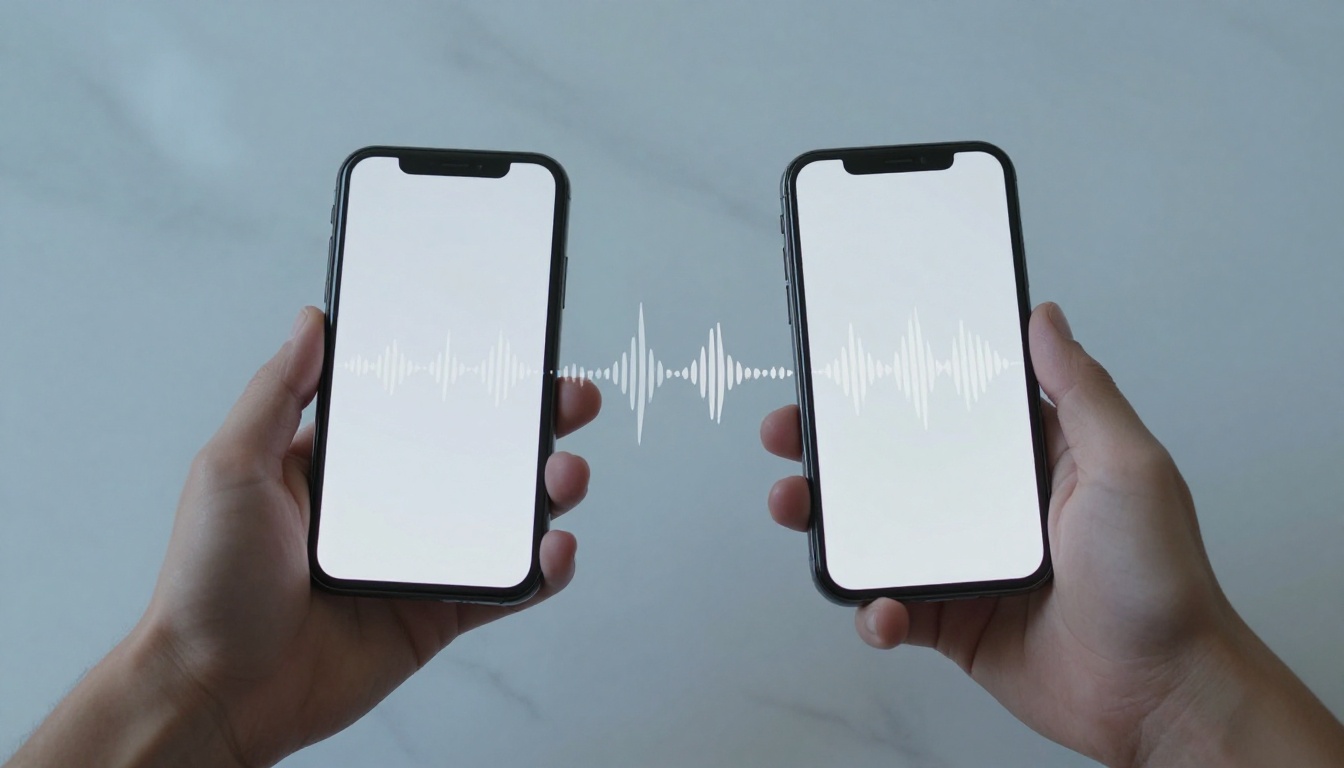
Your brain processes voices differently from text. Not just faster, but in a fundamentally different neural pathway.
Your Brain on Voice
When you hear a human voice, including a sufficiently realistic synthetic one, your brain activates regions associated with social cognition, empathy, and emotional processing simultaneously. Text activates language centers. Voice activates the whole social brain.
Specifically:
- The superior temporal sulcus processes voice identity and emotional tone together
- The amygdala responds to vocal emotion signals with roughly 10x the speed of reading equivalent emotional content
- Oxytocin release, associated with bonding and trust, correlates with warm vocal tone in conversation
This is why you can spend two hours texting someone and feel roughly the same emotional state you started in, then spend 20 minutes on a phone call with the same person and feel notably different by the end. The phone call has reached deeper.
Prosody Is Not Optional
Prosody is the music of speech: the rise and fall of pitch, the rhythmic pattern of stressed and unstressed syllables, the way emotion bends the shape of sentences. It is not decoration. It is content.
A sentence like "you should come over sometime" is, in text, a casual suggestion. Spoken with a rising intonation and a half-second pause at the end, it becomes an invitation. Spoken with falling intonation and a speed increase, it becomes dismissal. The words are identical. The meaning is completely different.
Modern AI TTS models have moved well beyond flat robotic speech precisely because engineers understood this. The race now is not to make AI sound human. It is to make AI sound emotionally present.
What Makes AI Voice Feel Real

Three things separate a voice that hits from one that does not: latency, prosodic expressiveness, and voice character consistency. Get all three right and people forget they are listening to a machine.
Latency Is Everything
In a real conversation, the gap between one person finishing a sentence and another beginning is typically 200 to 300 milliseconds. This is incredibly fast. Human brains are wired to interpret pauses longer than about 600ms as hesitation, disinterest, or discomfort.
Early text-to-speech models had latency measured in seconds. You typed, you waited, you heard. That pause destroyed the conversational illusion completely. The brain correctly categorized it as a system response, not a person.
Inworld Realtime TTS 2 clocks in at sub-200ms latency. ElevenLabs Flash v2.5 hits similar numbers. At that speed, the brain's conversational timing system stays in "real conversation" mode rather than switching to "system interaction" mode. That distinction matters enormously for how the exchange feels.
The Best TTS Models Right Now
💡 The sweet spot for AI companion voice is ElevenLabs V3 paired with a large language model for response generation. V3 handles everything from a breathless rush of excitement to a slow, deliberate intimate tone. It is the closest to "she sounds real" you will find right now.
Text vs Voice: A Real Comparison

Let's be specific about what each format can and cannot do.
Speed Does Not Equal Depth
Text is faster to produce and consume. You can skim it, re-read it, share it. But speed of information transfer is not the same as emotional depth of experience. A text conversation is closer to email than to presence.
| Dimension | Text | Voice |
|---|
| Emotional bandwidth | Low (words only) | High (words + tone + prosody) |
| Processing speed | Fast (visual scan) | Moderate (sequential audio) |
| Feeling of presence | Low | High |
| Ambiguity | High (tone guessed) | Low (tone transmitted) |
| Re-readable | Yes | Not easily |
| Intimacy ceiling | Medium | Very high |
| Memory formation | Moderate | Strong |
The intimacy ceiling is the most important row in that table. There is a limit to how close a text exchange can feel, because the brain keeps a wall up that voice tears down. This is why phone calls between long-distance couples do emotional work that thousands of texts cannot.
When Voice Wins Every Time
Late at night. The context of lying in bed in the dark, listening to a warm voice, creates an intimacy that no chat window can replicate. The absence of visual stimulation sends more processing resources to auditory input. The voice sounds closer, more present.
During emotional moments. If someone is anxious, sad, or vulnerable, they need prosodic reassurance, not text. The rhythm of a calm voice regulates nervous system arousal. Words on a screen do not.
For building attachment. Repeated exposure to a consistent voice with a consistent character builds what psychologists call parasocial bonds. These are the same bonds people form with radio hosts, podcast personalities, and the voice behind an audiobook they have been listening to for 12 hours. Text companions rarely trigger this mechanism. Voice companions reliably do.
How to Use These Models on PicassoIA
PicassoIA hosts all the top TTS models alongside the LLMs needed to power conversation. Here is how to build a functional AI voice companion pipeline.
Step-by-Step with ElevenLabs V3
ElevenLabs V3 is the premium choice for anyone who wants voice that genuinely moves them.
- Go to ElevenLabs V3 on PicassoIA
- Select a voice from the available presets or clone a custom voice using MiniMax Voice Cloning
- Paste your text, written with emotional flow in mind: use commas for natural pausing, ellipses for trailing thoughts
- Adjust stability and similarity sliders — lower stability gives more expressive, varied delivery; higher stability keeps it consistent
- Generate and listen — V3 handles whispers, emphasis, and emotional peaks without requiring explicit markup
💡 Pro tip: Write your AI companion dialogue using a large language model first. Claude Sonnet 5 or GPT 5 can generate emotionally intelligent companion responses. Then feed that output to V3 for voice synthesis. The combination is significantly more compelling than either tool alone.
MiniMax Speech 2.8 HD for Warmth
If you want warmth over range, MiniMax Speech 2.8 HD is the answer. It produces a naturally breathy, close-mic quality that sounds like someone speaking specifically to you rather than to a room.
- Navigate to MiniMax Speech 2.8 HD
- Choose voice character from the available selection, paying attention to warmth vs clarity descriptions
- Input text written in conversational fragments rather than complete formal sentences
- Render audio and note how the model handles sentence-final falling tones, which create a sense of intimacy and closure after each statement
- Combine with Gemini 3.5 Flash for fast LLM-driven responses in a real-time loop
3 Common Mistakes With AI Voice

Building something that actually feels real requires avoiding some obvious pitfalls.
1. Using a voice that does not match the persona. A high-pitched, fast-paced voice for a character described as calm and grounded breaks immersion instantly. Spend time selecting or cloning a voice that matches the emotional register of the persona you have designed. Resemble AI Chatterbox gives you explicit emotion control so you can dial in the right delivery from the start.
2. Writing text that sounds like text. Most people write AI dialogue the same way they write emails: clean, grammatically complete sentences. Spoken language has contractions, trailing thoughts, interruptions, and fillers. Text that reads like a formal document will always sound robotic regardless of how good the TTS model is. Write the way people actually talk.
3. Ignoring latency. Building a voice companion with a 3-second response time is not a voice companion. It is a voice-shaped chatbot. For anything that needs to feel like conversation, use Inworld Realtime TTS 1.5 Max or ElevenLabs Flash v2.5 and pair them with fast LLM inference. Latency is the single biggest immersion-breaker in AI voice, and it is the easiest one to fix.
What AI Voice Still Cannot Do

Honesty here is worth more than hype. There are specific things that even the best AI voice cannot currently replicate.
Spontaneous laughter. Genuine laughter is biologically distinct from synthetic laughter. Most TTS models handle scripted humor reasonably well but cannot produce the unplanned, cascading laugh of someone who heard something truly unexpected. Resemble AI Chatterbox Pro comes closest with its emotion expressiveness capabilities, but it is not there yet.
Meaningful silence. Real human conversation includes silence that carries weight. The pause when someone is deciding whether to say something vulnerable. The quiet after a moment that landed. Most AI voice pipelines are engineered to minimize silence, treating it as failure. This creates an always-filling quality that paradoxically feels less human.
Voice memory. A voice that has known you for a year sounds subtly different talking to you than it does talking to a stranger. It has learned where to pause, which jokes land, which topics get slower and softer. Current AI voice systems do not accumulate this acoustic memory. It is the next frontier.
What Happens When You Actually Try It

The gap between "interesting technology" and "actually changes how I spend evenings" is voice. Text companions are a productivity tool that occasionally feels warm. Voice companions are something else.
The models on PicassoIA give you everything you need to build the version that works for you. Start with ElevenLabs V3 for unmatched expressiveness. Run responses through Claude Sonnet 5 or GPT 5 for intelligent, emotionally calibrated dialogue. Use MiniMax Voice Cloning if you want a specific voice character that stays consistent across every session.

Or, if you want to start fast, pick any of the 24 text-to-speech models currently available on PicassoIA and spend 20 minutes writing dialogue designed for speaking rather than reading. The difference is immediately apparent. There is something waiting on the other side of that first voice call that text never prepared you for. The only way to know what it is, is to hear it.


